Thioanisole → N-[2-[(4R)-4-(hydroxymethyl)-4,5-dihydro-1,3-thiazol-2-yl]-5-(2-methoxyethoxy)-1H-indol-7-yl]-N-methylpyridine-2-sulfonamide
Reaction equation

C1(P(=O)(C2C=CC=CC=2)C2C=CC=CC=2)C=CC=CC=1.FC(F)(F)S(OS(C(F)(F)F)(=O)=O)(=O)=O.CO[C:38](=[O:77])[C@H:39]([CH2:68][S:69]CC1C=CC=CC=1)[NH:40][C:41]([C:43]1[NH:44][C:45]2[C:50]([CH:51]=1)=[CH:49][C:48]([O:52][CH2:53][CH2:54][O:55][CH3:56])=[CH:47][C:46]=2[N:57]([CH3:67])[S:58]([C:61]1[CH:66]=[CH:65][CH:64]=[CH:63][N:62]=1)(=[O:60])=[O:59])=O.C1(SC)C=CC=CC=1.C(=O)([O-])O.[Na+].COCCOC1C=C2C(=C(N(C)S(C3C=CC=CN=3)(=O)=O)C=1)NC(C1SC[C@@H](C(OC)=O)N=1)=C2>ClCCl.O1CCCC1.[BH4-].[Na+].O.CO>[OH:77][CH2:38][C@@H:39]1[CH2:68][S:69][C:41]([C:43]2[NH:44][C:45]3[C:50]([CH:51]=2)=[CH:49][C:48]([O:52][CH2:53][CH2:54][O:55][CH3:56])=[CH:47][C:46]=3[N:57]([CH3:67])[S:58]([C:61]2[CH:66]=[CH:65][CH:64]=[CH:63][N:62]=2)(=[O:59])=[O:60])=[N:40]1Participants
Reactant 6
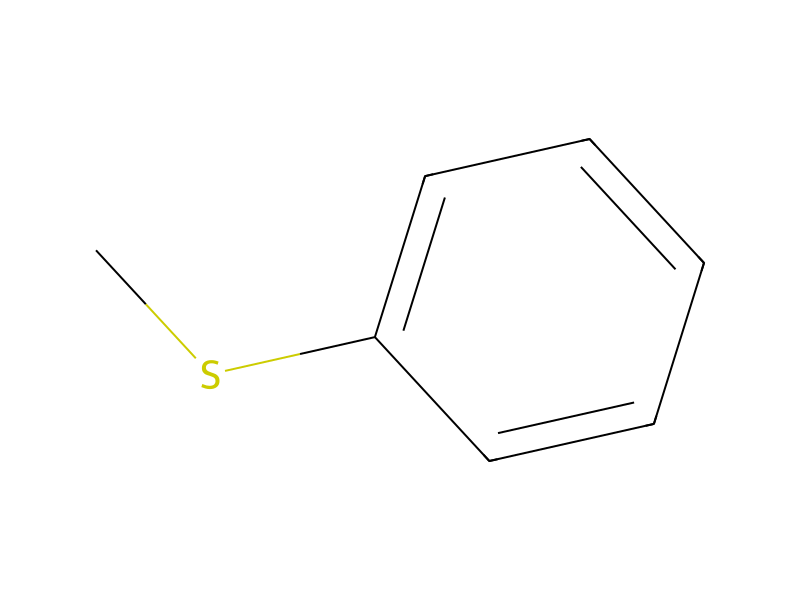 HCID 7520Thioanisole
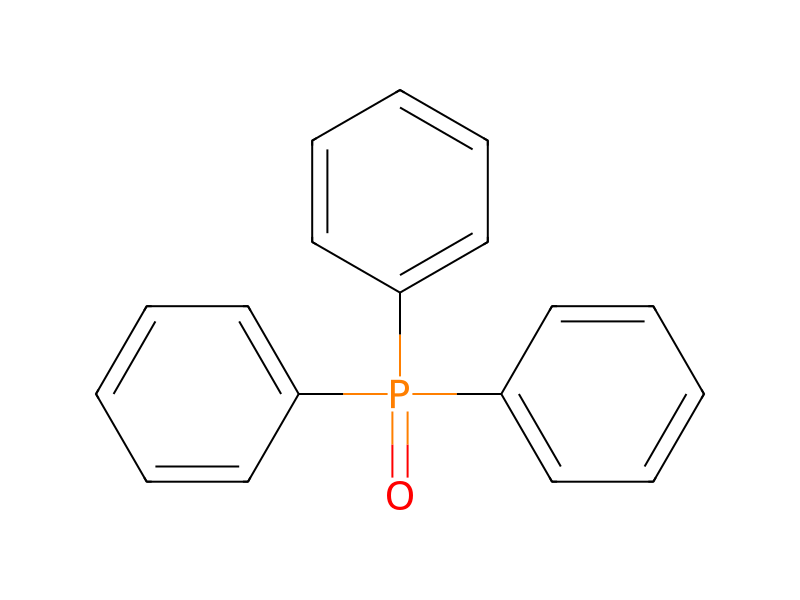 HCID 13097Triphenylphosphine Oxide3×
 HCID 67749Trifluoromethanesulfonic anhydride
 HCID 516892Sodium Bicarbonate
 HCID 59136110S-benzyl-N-({5-(2-methoxyethoxy)-7-[methyl(pyridin-2-ylsulfonyl)amino]-1H-indol-2-yl)carbonyl)-L-cysteine methyl ester
 HCID 86619909methyl (4R)-2-{5-(2-methoxyethoxy)-7-[methyl(pyridin-2-ylsulfonyl)amino]-1H-indol-2-yl}-4,5-dihydro-1,3-thiazole-4-carboxylate
Product 1

Reagents, catalysts & solvents 5





Conditions
- Temperature
- 0 °C
Procedure
To a solution of triphenylphosphine oxide (2.7 g) in dichloromethane (6 mL) was added dropwise trifluoromethanesulfonic anhydride (1.2 mL) at 0° C., and the mixture was stirred at 0° C. for 15 min. The obtained suspension was diluted with dichloromethane (19 mL), and a solution of S-benzyl-N-({5-(2-methoxyethoxy)-7-[methyl(pyridin-2-ylsulfonyl)amino]-1H-indol-2-yl}carbonyl)-L-cysteine methyl ester (1.0 g) and thioanisole (1.5 mL) in dichloromethane (25 mL) was added. The reaction mixture was stirred at 0° C. for 1 hr, saturated aqueous sodium hydrogencarbonate solution was added, and the mixture was concentrated. The residue was extracted with ethyl acetate. The ethyl acetate layer was washed with water and saturated brine, dried (MgSO4), and concentrated. The obtained residue was subjected to basic silica gel column chromatography, and eluted with hexane-ethyl acetate (1:1, volume ratio) to give a mixture of methyl (4R)-2-{5-(2-methoxyethoxy)-7-[methyl(pyridin-2-ylsulfonyl)amino]-1H-indol-2-yl}-4,5-dihydro-1,3-thiazole-4-carboxylate and triphenylphosphine oxide. The obtained mixture of the ester and triphenylphosphine oxide was dissolved in tetrahydrofuran (5 mL), sodium borohydride (0.053 mg) was added at 0° C., and methanol (2.5 mL) was added dropwise at 0° C. The reaction mixture was stirred at 0° C. for 1 hr, and then at room temperature for 3 hr. Water was added, the mixture was concentrated, and the residue was extracted with ethyl acetate. The ethyl acetate layer was washed with water and saturated brine, dried (MgSO4), and concentrated. The obtained residue was subjected to silica gel column chromatography, and eluted with hexane-ethyl acetate (4:1-0:1, volume ratio) to give the title compound (0.27 g, yield 36%) as a colorless amorphous solid. MS: 477 (MH+).
Workup
- stirringThe reaction mixture was stirred at 0° C. for 1 hr
- concentrationthe mixture was concentrated
- extractionThe residue was extracted with ethyl acetate
- washThe ethyl acetate layer was washed with water and saturated brine
- dry with materialdried (MgSO4)
- concentrationconcentrated
- washeluted with hexane-ethyl acetate (1:1, volume ratio)
- customto give
- stirringThe reaction mixture was stirred at 0° C. for 1 hr
- waitat room temperature for 3 hr
- concentrationthe mixture was concentrated
- extractionthe residue was extracted with ethyl acetate
- washThe ethyl acetate layer was washed with water and saturated brine
- dry with materialdried (MgSO4)
- concentrationconcentrated
- washeluted with hexane-ethyl acetate (4:1-0:1, volume ratio)
Sources & evidence
- ORD record
- ord-09a98f189db943189a16a51c99f2ec3c
- Source dataset
- uspto-grants-2010_01
- Patent number
- US07652133B2
Reaction notes
Loading…