Hydrochloric Acid → HCID 20377644, compound
Reaction equation

Br[C:2]1[CH:7]=[CH:6][C:5]([CH3:8])=[CH:4][CH:3]=1.[Mg].[CH:10]1[C:23]2[C:22](=[O:24])[C:21]3[C:16](=[CH:17][CH:18]=[CH:19][CH:20]=3)[C:15](=[O:25])[C:14]=2[CH:13]=[CH:12][CH:11]=1.Cl>C1(C)C=CC=CC=1.O1CCCC1>[OH:25][C:15]1([C:2]2[CH:7]=[CH:6][C:5]([CH3:8])=[CH:4][CH:3]=2)[C:16]2[CH:17]=[CH:18][CH:19]=[CH:20][C:21]=2[C:22](=[O:24])[C:23]2[C:14]1=[CH:13][CH:12]=[CH:11][CH:10]=2Participants
Reactant 4

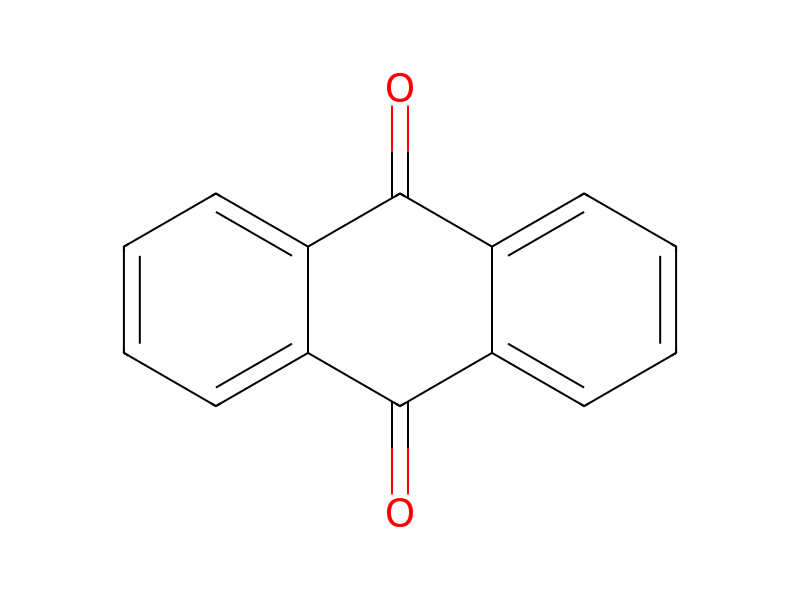
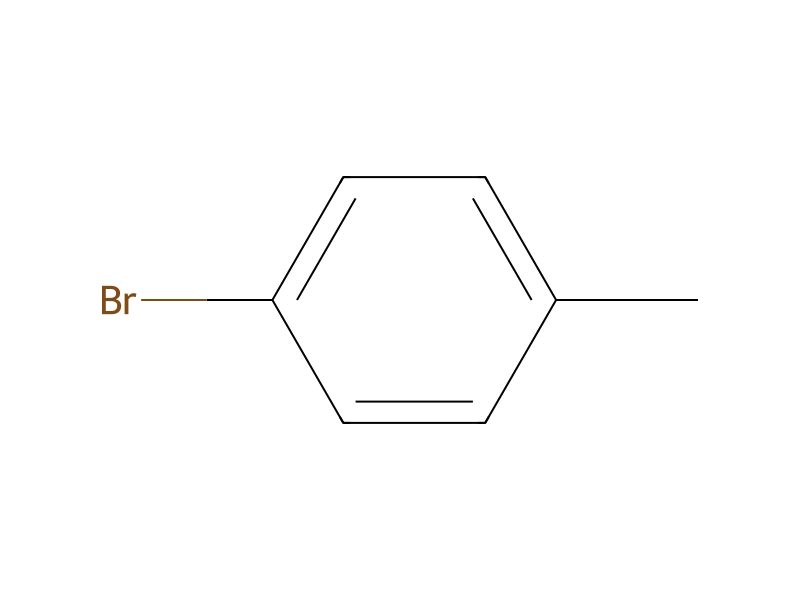

Product 1

Reagents, catalysts & solvents 2


Conditions
- Temperature
- 80 °C
Procedure
A Grignard solution, consisting of 85.5 g (0.5 mol) of 4-bromotoluene and 11.5 g of magnesium filings, is added dropwise to 104 g (0.5 mol) of anthraquinone in 2,000 ml of absolute toluene and 500 ml of absolute tetrahydrofurane at 80° C. After the dropwise addition has ended, the mixture is subsequently stirred for 6 hours at 80° C. The reaction mixture is then hydrolysed in 2,000 ml of ice water, containing hydrochloric acid. The organic phase is separated off, washed with water, dried over sodium sulphate and concentrated by distilling off the solvent in vacuo. The solid residue is recrystallised from acetonitrile. 32.5 g (21% of theory) of 9,10-dihydro-9-hydroxy-9-(4-methylphenyl)-10-oxoanthracene of melting point 203°-209° C. are obtained.
Workup
- additionAfter the dropwise addition
- customThe organic phase is separated off
- washwashed with water
- dry with materialdried over sodium sulphate
- concentrationconcentrated
- distillationby distilling off the solvent in vacuo
- customThe solid residue is recrystallised from acetonitrile
Sources & evidence
- ORD record
- ord-cf99ae7af0254a57a4dfeb0d8b46acd7
- Source dataset
- uspto-grants-1980_01
- Patent number
- US04183940
Reaction notes
Loading…