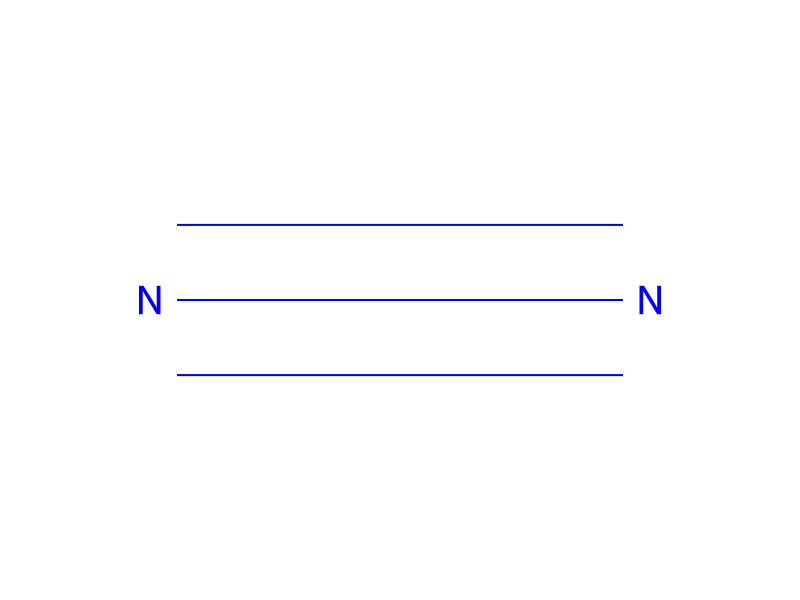
Nitrogen → HCID 56595565, compound
Reaction equation

Br[C:2]1[CH:3]=[N:4][CH:5]=[C:6]([O:8][CH2:9][C@@H:10]2[CH2:13][CH2:12][N:11]2[C:14]([O:16][C:17]([CH3:20])([CH3:19])[CH3:18])=[O:15])[CH:7]=1.C(N(CC)CC)C.[CH3:28][Si:29]([C:32]#[CH:33])([CH3:31])[CH3:30].N#N>[Cu]I.Cl[Pd](Cl)([P](C1C=CC=CC=1)(C1C=CC=CC=1)C1C=CC=CC=1)[P](C1C=CC=CC=1)(C1C=CC=CC=1)C1C=CC=CC=1.C1(P(C2C=CC=CC=2)C2C=CC=CC=2)C=CC=CC=1.CCOC(C)=O.CCCCCC>[C:17]([O:16][C:14]([N:11]1[CH2:12][CH2:13][C@H:10]1[CH2:9][O:8][C:6]1[CH:5]=[N:4][CH:3]=[C:2]([C:33]#[C:32][Si:29]([CH3:31])([CH3:30])[CH3:28])[CH:7]=1)=[O:15])([CH3:20])([CH3:19])[CH3:18]Participants
Reactant 4



Product 1

Reagents, catalysts & solvents 4




Procedure
A 50 mL round-bottom flask with stir bar was charged with 3-bromo-5-[[1-(tert-butoxycarbonyl)-2(S)-azetidinyl]methoxy]pyridine (564 mg, 1.64 mmol), copper(I) iodide (25 mg, 0.13 mmol, 0.08 equiv.), bis(triphenylphosphine)palladium(II) chloride (49 mg, 66 μmol, 0.04 equiv.), and triphenylphosphine (34 mg, 0.13 mmol, 0.08 equiv.). Anhydrous triethylamine (5 mL) and trimethylsilylacetylene (0.63 mL, 4.45 mmol, 2.7 equiv.) were added. The flask was equipped with a reflux condenser topped by a N2 balloon, and the reaction mixture was heated to gentle reflux (heating mantle) for 16 h. A black color appeared soon after heating. After cooling, the mixture consisted of an amber solution and a black precipitate. TLC (silica gel, EtOAc/hexane 55:45) demonstrated complete conversion (Rf 0.6; starting material: Rf 0.55). The reaction mixture was evaporated and the residue was taken up in DMPU (0.8 mL+0.4 mL rinse) and was chromatographed on silica gel (25×2.5 cm, EtOAc/hexane 35:65 switching to 45:55 after appearance of the product). After evaporation of the product-containing fractions, the residue was twice evaporated with CH3CN and the solution before the final evaporation was filtered over a cotton plug to remove a small amount of solid. Drying (50° C./14 torr) afforded 587 mg (99%) of the product as a light-amber glass of sufficient purity to be used in the subsequent step. 1H NMR (CDCl3, TMS, 250 MHz) δ 8.30 (d, 1H, J=1.4 Hz), 8.27 (d, 1H, J=2.8 Hz), 7.30 (dd, 1H, 1.6, 2.7 Hz), 4.51 (m, 1H), 4.32 (m, 1H), 4.12 (dd, 1H, J=2.8, 10.1 Hz), 3.88 (t, 2H, J=7.6 Hz), 2.43-2.20 (m, 2H), 1.43 (s, 9H), 0.26 (s, 9H); 13C NMR (CDCl3, 62.5 MHz) δ 156.1, 154.3, 145.0, 138.1, 133.9, 123.2, 120.3, 101.2, 98.0, 79.6, 68.6, 59.9, 46.9 (br), 28.3, 18.9, 0.1.
Workup
- customThe flask was equipped with a reflux condenser
- temperaturethe reaction mixture was heated
- temperatureto gentle reflux
- temperature(heating mantle) for 16 h
- temperatureafter heating
- temperatureAfter cooling
- customThe reaction mixture was evaporated
- customwas chromatographed on silica gel (25×2.5 cm, EtOAc/hexane 35:65 switching to 45:55 after appearance of the product)
- customAfter evaporation of the product-containing fractions
- customthe residue was twice evaporated with CH3CN
- customthe solution before the final evaporation
- filtrationwas filtered over a cotton plug
- customto remove a small amount of solid
- customDrying (50° C./14 torr)
Sources & evidence
- ORD record
- ord-763a72d9371142d99b99a089bc0065d1
- Source dataset
- uspto-grants-2013_05
- Patent number
- US08445684B2
Reaction notes
Loading…