1,3-Dibromopropane → HCID 23079680, compound
Reaction equation

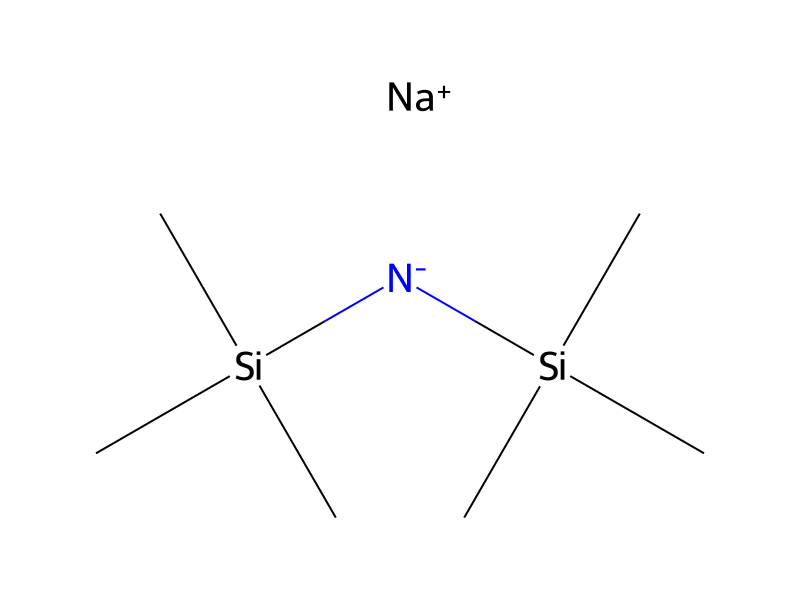
[O:1]=[C:2]1[NH:7][CH2:6][CH2:5][N:4]([C:8]([O:10][C:11]([CH3:14])([CH3:13])[CH3:12])=[O:9])[CH2:3]1.C[Si]([N-][Si](C)(C)C)(C)C.[Na+].Br[CH2:26][CH2:27][CH2:28]Br.[NH:30]1[CH2:34][CH2:33][CH2:32][CH2:31]1.C(=O)([O-])[O-].[K+].[K+]>O1CCCC1.O>[O:1]=[C:2]1[N:7]([CH2:26][CH2:27][CH2:28][N:30]2[CH2:34][CH2:33][CH2:32][CH2:31]2)[CH2:6][CH2:5][N:4]([C:8]([O:10][C:11]([CH3:14])([CH3:13])[CH3:12])=[O:9])[CH2:3]1Participants
Reactant 5




Product 1

Reagents, catalysts & solvents 2


Conditions
- Temperature
- 50 °C
Procedure
Tert-butyl 3-oxo-piperazinecarboxylate (1.5 g, 7.5 mmol) was dissolved in tetrahydrofuran (15 mL), and the solution was mixed with sodium bis(trimethylsilyl)amide (1.0 mol/L, 15 mL, 15 mmol) added dropwise with stirring under ice-cooling. After ten minutes, 1,3-dibromopropane (3.0 mL, 30 mmol) was added dropwise. The reaction mixture was heated to 50° C., was stirred for three hours, was poured onto water and was extracted with ethyl acetate. The organic layer was washed with brine, was dried over anhydrous sodium sulfate, and the solvent was distilled off. The residue was purified by silica gel chromatography (hexane:ethyl acetate=1:2) to thereby remove residual raw materials, and the solvent was distilled off. The residue was dissolved in dimethylformamide (12 mL), and the solution was mixed with pyrrolidine (1.6 mL, 19 mmol) and potassium carbonate (0.57 g, 4.1 mmol), followed by stirring at 80° C. for eight hours. The reaction mixture was diluted with water and was extracted with ethyl acetate. The organic layer was mixed with diluted hydrochloric acid (1.0 mol/L, 30 mL), and the organic layer and the aqueous layer were separated. The aqueous layer was adjusted to be basic with an aqueous sodium hydroxide solution (2.0 mol/L) and was extracted with ethyl acetate. The organic layer was washed with brine, was dried over anhydrous sodium sulfate, and the solvent was distilled off. The residue was purified by silica gel chromatography (chloroform:7.0 mol/L ammonia methanol solution=30:1) and thereby yielded tert-butyl 3-oxo-4-(3-pyrrolidin-1-yl-propyl)piperazinecarboxylate (0.16 g, 6.8%).
Workup
- additionadded dropwise
- temperaturecooling
- waitAfter ten minutes
- stirringwas stirred for three hours
- additionwas poured onto water
- extractionwas extracted with ethyl acetate
- washThe organic layer was washed with brine
- dry with materialwas dried over anhydrous sodium sulfate
- distillationthe solvent was distilled off
- customThe residue was purified by silica gel chromatography (hexane:ethyl acetate=1:2)
- customto thereby remove residual raw materials
- distillationthe solvent was distilled off
- dissolutionThe residue was dissolved in dimethylformamide (12 mL)
- stirringby stirring at 80° C. for eight hours
- extractionwas extracted with ethyl acetate
- additionThe organic layer was mixed with diluted hydrochloric acid (1.0 mol/L, 30 mL)
- customthe organic layer and the aqueous layer were separated
- extractionwas extracted with ethyl acetate
- washThe organic layer was washed with brine
- dry with materialwas dried over anhydrous sodium sulfate
- distillationthe solvent was distilled off
- customThe residue was purified by silica gel chromatography (chloroform:7.0 mol/L ammonia methanol solution=30:1)
Sources & evidence
- ORD record
- ord-3575cb64b32145a08294c8596b080945
- Source dataset
- uspto-grants-2009_04
- Patent number
- US07524852B2
Reaction notes
Loading…