Potassium Carbonate → Triphenylphosphine Oxide
Reaction equation

[C:1]1([P:7]([C:14]2[CH:19]=[CH:18][CH:17]=[CH:16][CH:15]=2)[C:8]2[CH:13]=[CH:12][CH:11]=[CH:10][CH:9]=2)[CH:6]=[CH:5][CH:4]=[CH:3][CH:2]=1.BrCC1C=CC2C(=CC=CC=2)C=1.BrC1C=CC(C=[O:38])=CC=1.C([O-])([O-])=O.[K+].[K+]>C1(C)C=CC=CC=1.CCCCCC>[C:14]1([P:7](=[O:38])([C:1]2[CH:2]=[CH:3][CH:4]=[CH:5][CH:6]=2)[C:8]2[CH:13]=[CH:12][CH:11]=[CH:10][CH:9]=2)[CH:15]=[CH:16][CH:17]=[CH:18][CH:19]=1Participants


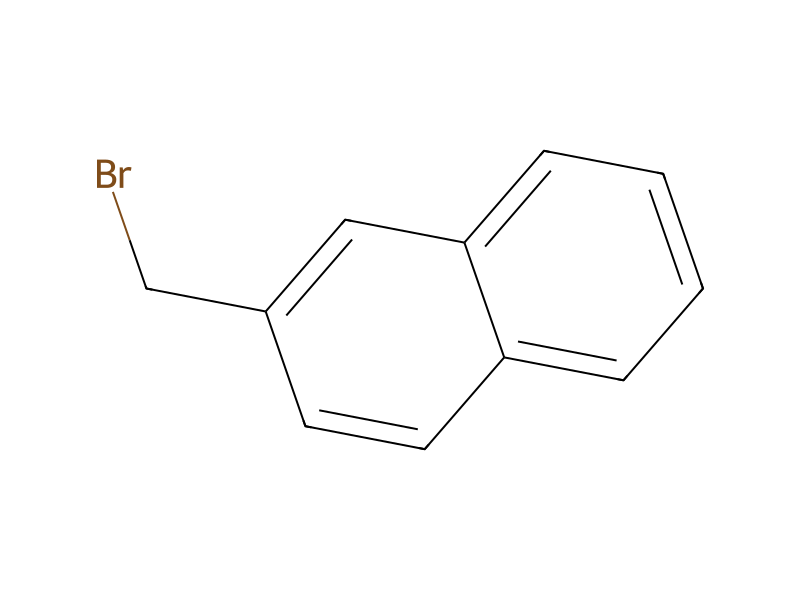
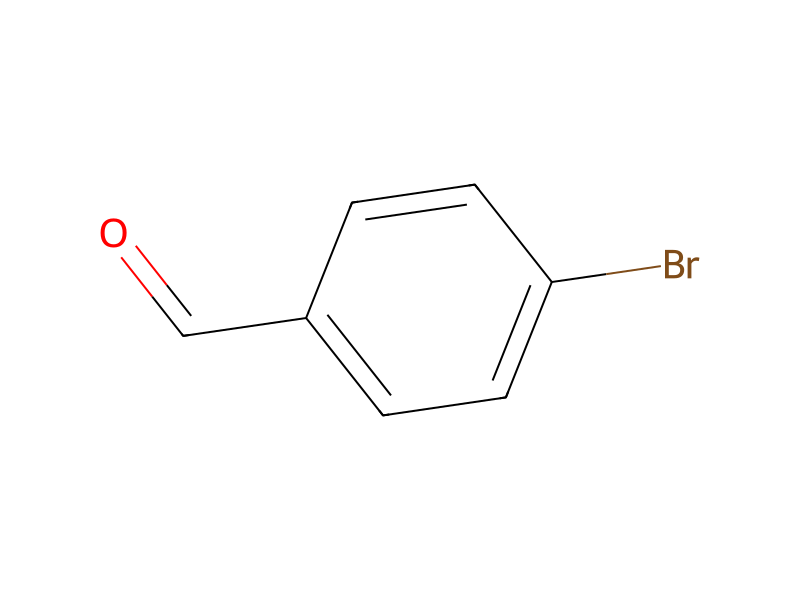
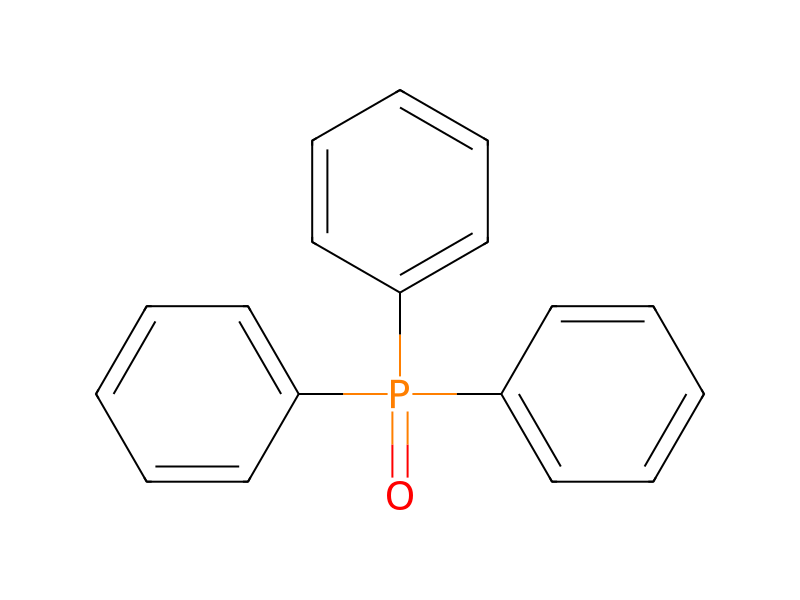


Procedure
0.50 g (1.91 mmol) of triphenylphosphine, 0.42 g (1.90 mmol) of 2-bromomethylnaphthalene, 0.36 g (1.98 mmol) of p-bromobenzaldehyde, and 0.50 g (3.62 mmol) of K2CO3 were placed in a hardened-steel vial in a glove box under helium. The vial was sealed, and the sample was ball-milled for eight hours. The formed powder was first analyzed by solid state 31P{1H} CP MAS NMR spectroscopy, then loaded on a silica gel chromatography column, and the mixture of (E)- and (Z)-1-(p-bromophenyl)-2-(naphthyl)ethylenes (VII) (E:Z ratio ca. 3.5:1 by 1H NMR in CDCl3) was isolated in 93% yield, (0.54 g) by eluation with hexane and toluene. Triphenylphosphine oxide was further obtained from the same column in 92% yield (0.53 g) using a hexane-acetone mixture as an eluant. The separation and purification of the E-isomer was performed according to the previously described procedure (Brooks et al., J. Am. Chem. Soc. 121, 5444 (1999)) by the column chromatography on silica gel.
Workup
- customThe vial was sealed
- customthe sample was ball-milled for eight hours
Sources & evidence
- ORD record
- ord-1bb015fe32d449198f1ad39f3b4db800
- Source dataset
- uspto-grants-2006_09
- Patent number
- US07105714B2
Reaction notes
Loading…