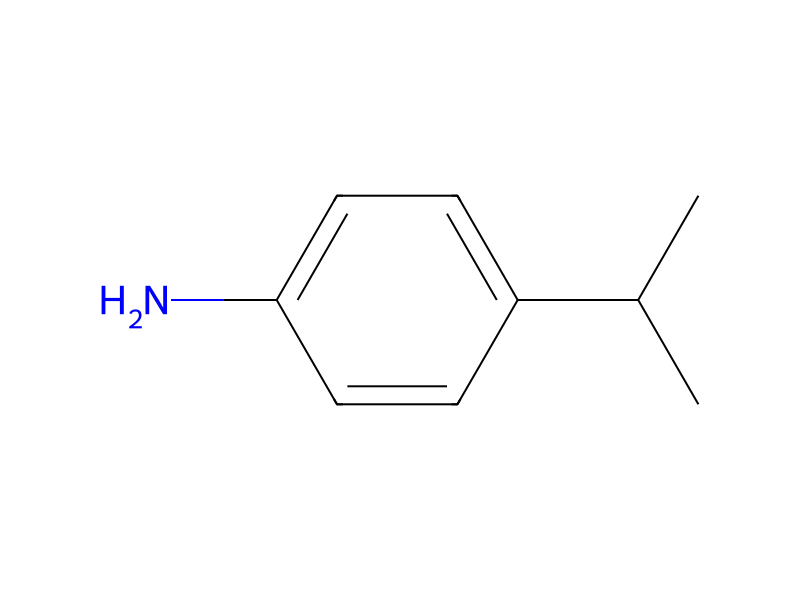
4-Isopropylaniline → 6-chloro-N-(4-propan-2-ylphenyl)pyridine-3-carboxamide
Reaction equation

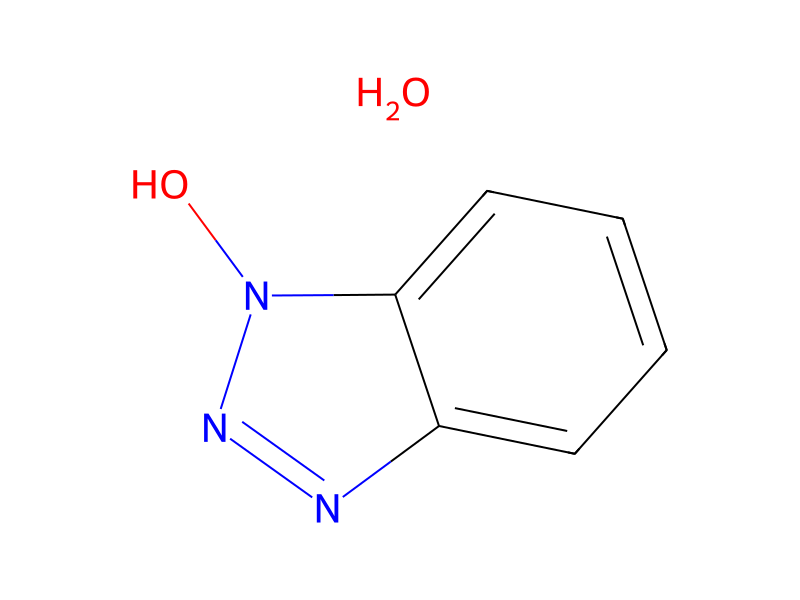
[Cl:1][C:2]1[CH:10]=[CH:9][C:5]([C:6]([OH:8])=O)=[CH:4][N:3]=1.[CH:11]([C:14]1[CH:20]=[CH:19][C:17]([NH2:18])=[CH:16][CH:15]=1)([CH3:13])[CH3:12].O.ON1C2C=CC=CC=2N=N1.Cl.C(N=C=NCCCN(C)C)C>CN(C=O)C.C(N(CC)CC)C>[CH:11]([C:14]1[CH:20]=[CH:19][C:17]([NH:18][C:6]([C:5]2[CH:4]=[N:3][C:2]([Cl:1])=[CH:10][CH:9]=2)=[O:8])=[CH:16][CH:15]=1)([CH3:13])[CH3:12]Participants
Reactant 4


Product 1

Reagents, catalysts & solvents 2


Procedure
6-Chloronicotinic acid (3.15 g), 4-isopropylaniline (2.73 mL) and triethylamine (5.6 mL) were dissolved in DMF (150 mL). 1-Hydroxybenzotriazole monohydrate (hereinafter to be abbreviated as HOBt.H2O) (3.22 g) and 1-ethyl-3-(3-dimethylaminopropyl)carbodiimide hydrochloride (hereinafter to be abbreviated as WSCI.HCl) (4.03 g) were added under ice-cooling. The mixture was stirred at room temperature for one day and the reaction mixture was partitioned between water and ethyl acetate. The organic layer was washed with saturated brine, and dried over anhydrous magnesium sulfate. The solvent was evaporated and ether was added to the residue. The precipitated solid was collected by filtration to give N-(4-isopropylphenyl)-6-chloropyridine-3-carboxamide (4.72 g).
Workup
- temperaturecooling
- customthe reaction mixture was partitioned between water and ethyl acetate
- washThe organic layer was washed with saturated brine
- dry with materialdried over anhydrous magnesium sulfate
- customThe solvent was evaporated
- additionether was added to the residue
- filtrationThe precipitated solid was collected by filtration
Sources & evidence
- ORD record
- ord-66bc49c4c9434a7ab3bb3e4d0f92cf69
- Source dataset
- uspto-grants-2010_12
- Patent number
- US07855297B2
Reaction notes
Loading…