Hydrochloric Acid → Cyclopentylhydrazinato--hydrogen chlorido (1/2)
Reaction equation

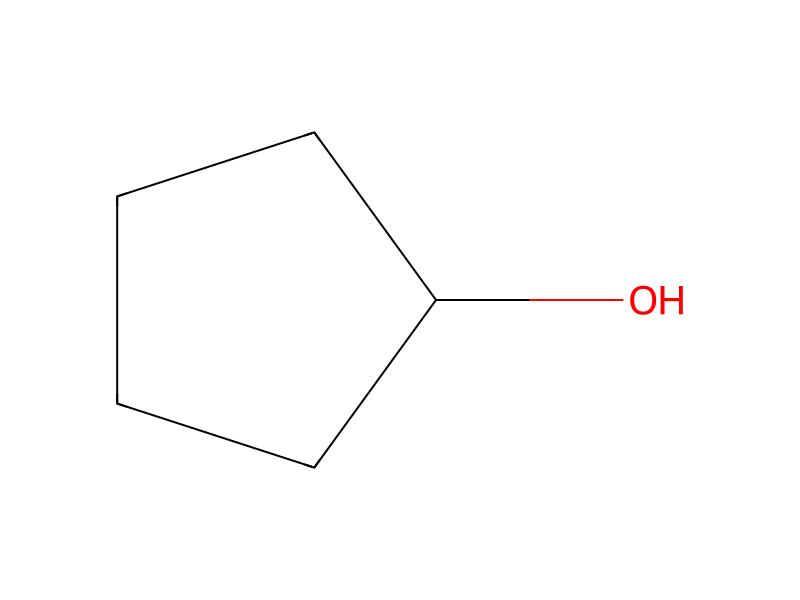
[CH:1]1(O)[CH2:5][CH2:4][CH2:3][CH2:2]1.C1(P(C2C=CC=CC=2)C2C=CC=CC=2)C=CC=CC=1.[N:26](C(OC(C)(C)C)=O)=[N:27]C(OC(C)(C)C)=O.[ClH:42].C1(N)C(F)=C(F)C(F)=C(N)C=1F.Cl.Cl>O1CCCC1.O>[ClH:42].[ClH:42].[CH:1]1([NH:26][NH2:27])[CH2:5][CH2:4][CH2:3][CH2:2]1Participants
Reactant 5




Product 1

Reagents, catalysts & solvents 2


Conditions
- Temperature
- 5 °C
Procedure
Cyclopentanol (6.127 kg, 71.1 moles) and triphenylphosphine (18.667 kg, 71.25 moles) were dissolved in tetrahydrofuran (40 gal) in a clean and dry, nitrogen purged 100 gallon tank and the reaction mixture was cooled to 5° C. A solution of di-t-butyl azodicarboxylate (14.9 kg, 64.7 moles) in tetrahydrofuran (36 L) was added over about 2 hours keeping the temperature <6° C. The reaction was allowed to stir for 5 hours as the temperature was allowed to slowly increase to 20-25° C. 6N HCl (26.5 L) was added to the reaction which was at 20° C. The reaction was allowed to stir 24 hours at 20-25° C. at which point the starting material had reacted. Water (10 gal, 37.85 L) was added and the tetrahydrofuran was removed by vacuum distillation. During the concentration, triphenylphosphine oxide precipitated and an additional 20 gal (75.7 L) of water was added. The reaction was cooled and methylene chloride (30 gal, 113.6 L) was added. The layers were separated and the aqueous was extracted twice more with methylene chloride (10 gal, 37.85 L) The aqueous was distilled to remove water. As the volume was reduced, isopropanol (3×20 gal (75.7 L)) was added to azeotrope the residual water. The resulting slurry was filtered and the solids were vacuum oven dried to give 7.682 kg (68.6% of theoretical) over multiple crops. This material was characterized to be the dihydrochloride salt; mp 189-194° C.
Workup
- customdry
- customnitrogen purged 100 gallon tank
- customthe temperature <6° C
- temperatureto slowly increase to 20-25° C
- customwas at 20° C
- stirringto stir 24 hours at 20-25° C. at which point the starting material
- customhad reacted
- customthe tetrahydrofuran was removed by vacuum distillation
- concentrationDuring the concentration, triphenylphosphine oxide
- customprecipitated
- additionan additional 20 gal (75.7 L) of water was added
- temperatureThe reaction was cooled
- additionmethylene chloride (30 gal, 113.6 L) was added
- customThe layers were separated
- extractionthe aqueous was extracted twice more with methylene chloride (10 gal, 37.85 L) The
- distillationaqueous was distilled
- customto remove water
- additionisopropanol (3×20 gal (75.7 L)) was added
- filtrationThe resulting slurry was filtered
- customdried
- customto give 7.682 kg (68.6% of theoretical) over multiple crops
Sources & evidence
- ORD record
- ord-bee5b722e6ac4d3a9349d32a68e5073b
- Source dataset
- uspto-grants-2001_12
- Patent number
- US06326495B2
Reaction notes
Loading…