Water → 1259224-06-0
Reaction equation

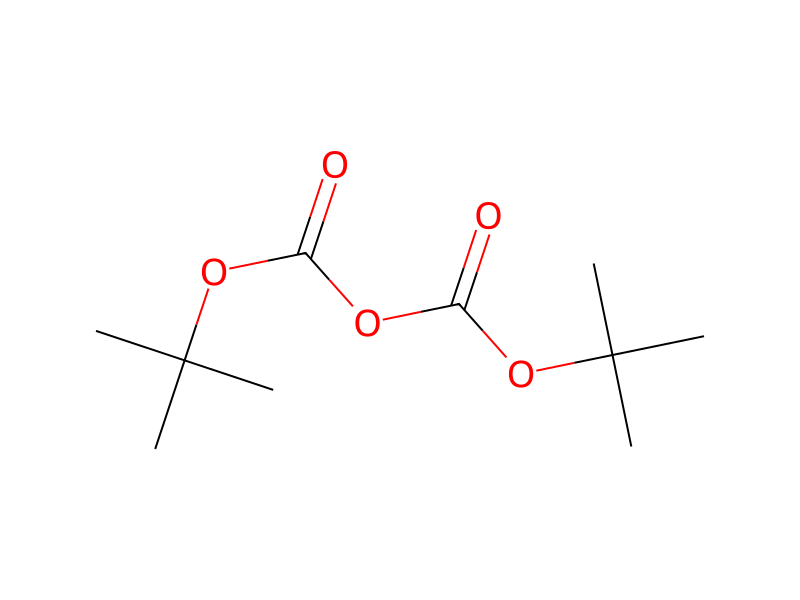
[Cl:1][C:2]1[CH:7]=[C:6]([NH2:8])[C:5]([I:9])=[CH:4][N:3]=1.C(O[C:13]([C:15]1[C:16](NCCC)=NC(SC)=N[CH:20]=1)=O)C.[C:27](OCC)(=[O:29])C.[OH2:33]>CN(C)C1C=CN=CC=1.O1CCCC1.C(N(CC)CC)C.C(OC(OC(C)(C)C)=O)(OC(C)(C)C)=O>[Cl:1][C:2]1[CH:7]=[C:6]([NH:8][C:27](=[O:29])[O:33][C:15]([CH3:16])([CH3:20])[CH3:13])[C:5]([I:9])=[CH:4][N:3]=1Participants
Reactant 4




Product 1

Reagents, catalysts & solvents 4



Procedure
To a solution of 2-chloro-4-amino-5-iodopyridine (252 mg) synthesized according to the method described in EP2108641 A1 and 4-dimethylaminopyridine (241 mg) in tetrahydrofuran (5 mL), triethylamine (208 μL) and di-tert-butyl dicarbonate (273 μL) were added at room temperature, and the mixture was stirred at the same temperature for 1 hour and 20 minutes, and then stirred for 2 hours under reflux by heating. The reaction mixture was cooled to room temperature, and then ethyl acetate and water were added to the reaction mixture. The organic layer was separated, washed with saturated aqueous sodium chloride, and then dried over anhydrous sodium sulfate, and the solvent was evaporated under reduced pressure. The obtained residue was purified by silica gel chromatography (eluent, 100 to 60% hexane in ethyl acetate) to obtain tert-butyl (2-chloro-5-iodopyridin-4-yl)carbamate (S8, 239 mg).
Workup
- additionwere added at room temperature
- stirringstirred for 2 hours
- temperatureunder reflux
- temperatureby heating
- customThe organic layer was separated
- washwashed with saturated aqueous sodium chloride
- dry with materialdried over anhydrous sodium sulfate
- customthe solvent was evaporated under reduced pressure
- customThe obtained residue was purified by silica gel chromatography (eluent, 100 to 60% hexane in ethyl acetate)
Sources & evidence
- ORD record
- ord-8f97ababf7be46269a898bef0554bcfd
- Source dataset
- uspto-grants-2015_09
- Patent number
- US09145415B2
Reaction notes
Loading…