Tetrahydrofuran → HCID 66884119, compound
Reaction equation

[CH3:1][O:2][C:3]1[CH:16]=[CH:15][C:6]([CH2:7][N:8]2[CH:12]=[C:11]([CH2:13][NH2:14])[N:10]=[N:9]2)=[CH:5][CH:4]=1.CO[C:19]1[CH:32]=[CH:31][C:22]([CH2:23][N:24]2[C:28](CN)=CN=N2)=[CH:21][CH:20]=1.[CH:33]([C:35]1[CH:40]=CC([B:41]([OH:43])[OH:42])=C[CH:36]=1)=O.C([O:47][BH-:48](OC(=O)C)[O:49]C(=O)C)(=O)C.[Na+].COC1C=CC(CN2C=C(CNCC3C=CC(B(O)O)=CC=3)N=N2)=CC=1.COC1C=CC(CN2C(CNCC3C=CC(B(O)O)=CC=3)=CN=N2)=CC=1.[C:110](=O)([O-:112])[O-:111].[K+].[K+].[C:116](OC(OC(C)(C)C)=O)([O:118][C:119]([CH3:122])([CH3:121])[CH3:120])=[O:117].O1CCCC1>O.C(OCC)(=O)C>[C:119]([O:118][C:116]([N:14]([CH2:23][C:22]1[CH:21]=[CH:20][C:19]([B:41]([OH:43])[OH:42])=[CH:32][CH:31]=1)[CH2:13][C:11]1[N:10]=[N:9][N:8]([CH2:7][C:6]2[CH:5]=[CH:4][C:3]([O:2][CH3:1])=[CH:16][CH:15]=2)[CH:12]=1)=[O:117])([CH3:122])([CH3:121])[CH3:120].[C:35]([O:112][C:110]([N:24]([CH2:23][C:22]1[CH:21]=[CH:20][C:19]([B:48]([OH:49])[OH:47])=[CH:32][CH:31]=1)[CH2:28][C:12]1[N:8]([CH2:7][C:6]2[CH:5]=[CH:4][C:3]([O:2][CH3:1])=[CH:16][CH:15]=2)[N:9]=[N:10][CH:11]=1)=[O:111])([CH3:33])([CH3:36])[CH3:40]Participants
Reactant 9


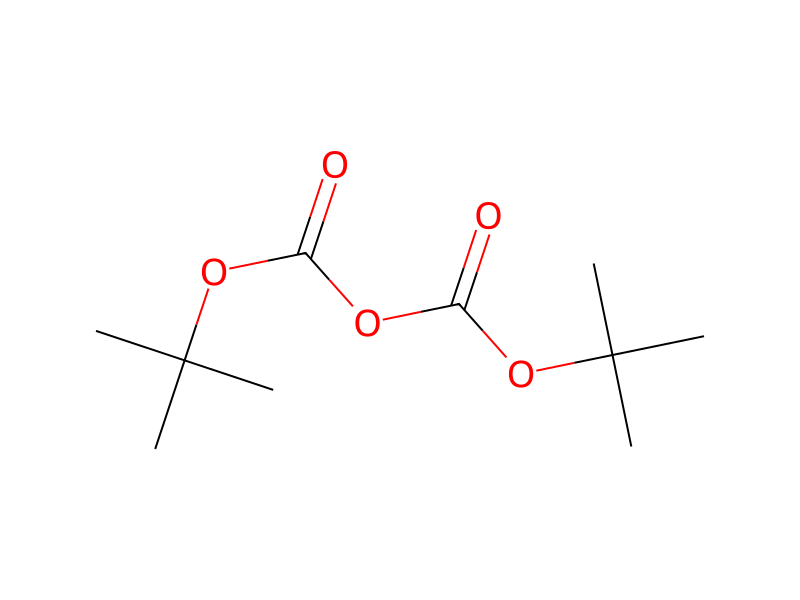




Product 2


Reagents, catalysts & solvents 2


Procedure
A solution of the regioisomeric C-[1-(4-methoxy-benzyl)-1H-[1,2,3]triazol-4-yl]-methylamine and C-[3-(4-methoxy-benzyl)-3H-[1,2,3]triazol-4-yl]-methylamine (1003 and 1004, 20.06 g, 92.0 mmol) in tetrahydrofuran (THF, 300 mL) was treated with 4-formylphenylboronic acid (13.11 g, 87.4 mmol, 0.95 equiv) at room temperature, and the resulting reaction mixture was stirred at room temperature for 10 min. Sodium triacetoxyborohydride (NaB(OAc)3H, 29.25 g, 138.0 mmol, 1.5 equiv) was then added to the reaction mixture in three portions over the period of 1.5 h at room temperature, and the resulting reaction mixture was stirred at room temperature for an additional 3.5 h. When TLC and HPLC/MS showed that the reductive amination reaction was complete, the reaction mixture, which contained a regioisomeric mixture of 4-({[1-(4-methoxy-benzyl)-1H-[1,2,3]triazol-4-ylmethyl]-amino}-methyl)-phenylboronic acid and 4-({[3-(4-methoxy-benzyl)-3H-[1,2,3]triazol-4-ylmethyl]-amino}-methyl)-phenylboronic acid as the reductive amination products (1006 and 1007), was then treated with water (H2O, 200 mL). The resulting aqueous solution was subsequently treated with solid potassium carbonate (K2CO3, 38.0 g, 276 mmol, 3.0 equiv) and di-tert-butyl dicarbonate (BOC2O, 20.08 g, 92 mmol, 1.0 equiv) at room temperature and the reaction mixture was stirred at room temperature for 2 b. When TLC and HPLC/MS showed that the N—BOC protection reaction was complete, the reaction mixture was treated with ethyl acetate (EtOAc, 150 mL) and water (H2O, 100 mL). The two layers were separated, and the aqueous layer was extracted with ethyl acetate (50 mL). The combined organic extracts were washed with H2O (50 mL), 1.5 N aqueous HCl solution (2×100 mL), H2O (100 mL), and saturated aqueous NaCl solution (100 mL), dried over MgSO4, and concentrated in vacuo. The crude, 4-({tert-butoxycarbonyl-[1-(4-methoxy-benzyl)-1H-[1,2,3]triazol-4-ylmethyl]-amino}-methyl)-phenylboronic acid and 4-({tert-butoxycarbonyl-[3-(4-methoxy-benzyl)-3H-[1,2,3]triazol-4-ylmethyl]-amino}-methyl)-phenylboronic acid (1008 and 1009, 38.45 g, 39.50 g, 97.3%) was obtained as a pale-yellow oil, which solidified upon standing at room temperature in vacuo. This crude material was found to be essentially identical in every comparable aspect as the material obtained from Method A and was directly used in the subsequent reaction without further purification.
Workup
- customthe resulting reaction mixture
- customthe resulting reaction mixture
- stirringwas stirred at room temperature for an additional 3.5 h
- customWhen TLC and HPLC/MS showed that the reductive amination reaction
- stirringthe reaction mixture was stirred at room temperature for 2 b
- customThe two layers were separated
- extractionthe aqueous layer was extracted with ethyl acetate (50 mL)
- washThe combined organic extracts were washed with H2O (50 mL), 1.5 N aqueous HCl solution (2×100 mL), H2O (100 mL), and saturated aqueous NaCl solution (100 mL)
- dry with materialdried over MgSO4
- concentrationconcentrated in vacuo
Sources & evidence
- ORD record
- ord-6b71f09b73e74c03be36e48d87f9e673
- Source dataset
- uspto-grants-2014_08
- Patent number
- US08796465B2
Reaction notes
Loading…