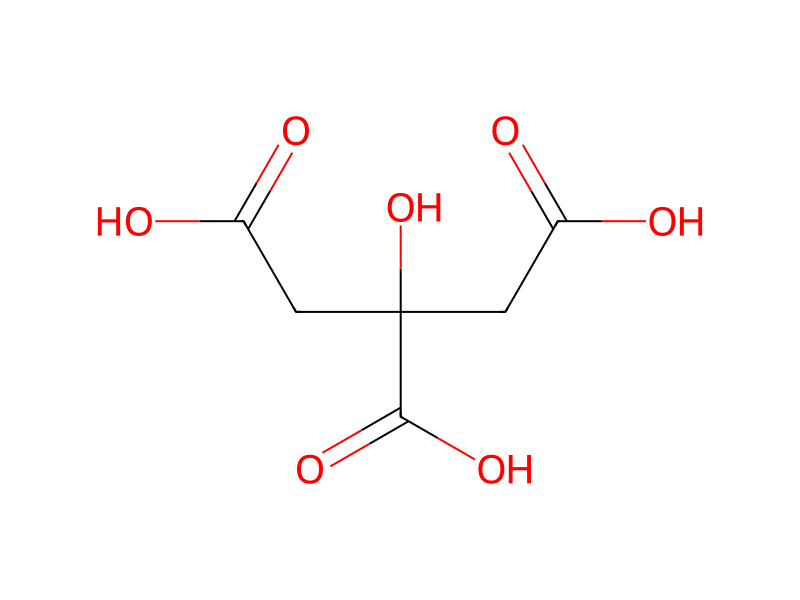
Citric Acid → HCID 46946861, compound
Reaction equation

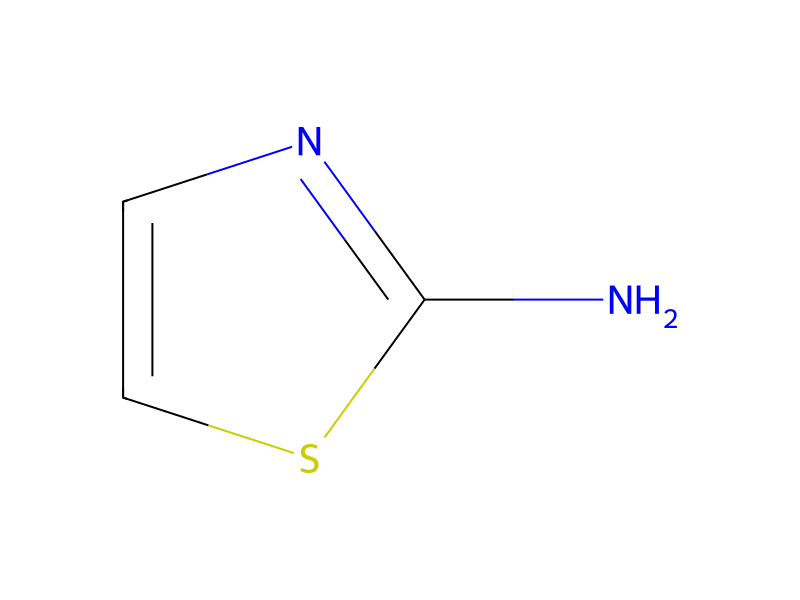
[CH3:1][N:2](C)[CH:3]=[O:4].C(Cl)(=O)C(Cl)=O.[CH:12]1(/[CH:17]=[C:18](\[C:22]2[CH:27]=[CH:26][C:25]([S:28]([CH3:31])(=[O:30])=[O:29])=[CH:24][CH:23]=2)/C(O)=O)[CH2:16][CH2:15][CH2:14][CH2:13]1.NC1[S:34][CH:35]=[CH:36][N:37]=1.C(N(CC)CC)C.NC1SC=CN=1.C(N(CC)CC)C.C(O)(=O)CC(CC(O)=O)(C(O)=O)O>O1CCCC1>[CH:12]1(/[CH:17]=[C:18](\[C:22]2[CH:23]=[CH:24][C:25]([S:28]([CH3:31])(=[O:29])=[O:30])=[CH:26][CH:27]=2)/[C:3]([NH:2][C:1]2[S:34][CH:35]=[CH:36][N:37]=2)=[O:4])[CH2:13][CH2:14][CH2:15][CH2:16]1Participants
Reactant 7





Product 1

Reagents, catalysts & solvents 1

Conditions
- Temperature
- 25 °C
Procedure
A solution of N,N-dimethylformamide (17.5 mL, 226.61 mmol) in dry tetrahydrofuran (420 mL) was cooled to −25° C. under a nitrogen atmosphere and then treated with oxalyl chloride (18.8 mL, 215.42 mmol). The solution became turbid soon after the addition of the oxalyl chloride. The reaction mixture was allowed to warm to 25° C. Upon warming to 25° C., gas evolution began around −20° C., and white solids precipitated with increasing warming temperatures. The reaction mixture was stirred at 25° C. for 15 min, resulting in a thick suspension of white solids. The reaction mixture was then cooled back to −25° C. and then treated with a solution of the (E)-3-cyclopentyl-2-(4-methanesulfonyl-phenyl)-acrylic acid (41.18 g, 139.88 mmol) in dry tetrahydrofuran (300 mL) over a period of 10 min. After complete addition of the (E)-3-cyclopentyl-2-(4-methanesulfonyl-phenyl)-acrylic acid solution, the reaction mixture was allowed to warm to 0° C. where it was stirred for 1 h. During the time at 0° C., the thick solids partially dissolved, leaving a fine suspension of white solids. After 1 h at 25° C., the reaction mixture was cooled to −45° C. The reaction mixture was then treated with a precooled (−45° C.) solution of 2-aminothiazole (44.97 g, 449.02 mmol) and triethylamine (62.6 mL, 449.02 mmol) in dry tetrahyfdrofuran (280 mL) via cannulation over a period of 10 min. The reaction mixture changed from a white suspension to a light brown color after the complete addition of the 2-aminothiazole/triethylamine solution. The reaction mixture was then allowed to warm to 0° C. over 15 min using an ice/water bath. Next, the reaction mixture was allowed to warm to 25° C. over a period of 30 min and then stirred at 25° C. for 1 h. After this time, the reaction mixture was cooled to −25° C. and then treated with a 1 M aqueous citric acid solution (250 mL), and the resulting reaction mixture was allowed to warm to 25° C. The reaction mixture was filtered through a plug of celite to remove the precipitated solids. The celite was washed well with ethyl acetate until the washings showed the absence of product by thin layer chromatography. The two-layer filtrate was transferred to a separatory funnel, and the layers were separated. The aqueous layer was extracted with ethyl acetate (1×500 mL). The organic layer was concentrated in vacuo to remove tetrahydrofuran, and the resulting residue was diluted with ethyl acetate (700 mL). The combined organic layers were washed successively with a 2M aqueous sodium hydrogen sulfate solution (3×200 mL), a saturated aqueous sodium chloride solution (1×200 mL), a 10% aqueous potassium carbonate solution (4×200 mL), and a saturated aqueous sodium chloride solution (1×300 mL). The organic layer was then dried over magnesium sulfate, filtered, and concentrated in vacuo. Flash chromatography (Merck Silica gel 60, 70-230 mesh, 3/2 hexanes/ethyl acetate) afforded (E)-3-cyclopentyl-2-(4-methanesulfonyl-phenyl)-N-thiazol-2-yl-acrylamide (27.93 g, 53%) as a white solid: mp 172-173° C.; FAB-HRMS m/e calcd for C18H20N2O3S2 (M+H)+377.0993, found 377.0986.
Workup
- temperatureUpon warming to 25° C.
- custombegan around −20° C.
- customwhite solids precipitated
- temperaturewith increasing
- temperaturewarming temperatures
- customresulting in a thick suspension of white solids
- temperatureThe reaction mixture was then cooled back to −25° C.
- temperatureto warm to 0° C. where it
- stirringwas stirred for 1 h
- dissolutionDuring the time at 0° C., the thick solids partially dissolved
- customleaving
- additiona fine suspension of white solids
- waitAfter 1 h at 25° C.
- temperaturethe reaction mixture was cooled to −45° C
- temperatureto warm to 0° C. over 15 min
- temperatureto warm to 25° C. over a period of 30 min
- stirringstirred at 25° C. for 1 h
- temperatureAfter this time, the reaction mixture was cooled to −25° C.
- customthe resulting reaction mixture
- temperatureto warm to 25° C
- filtrationThe reaction mixture was filtered through a plug of celite
- customto remove the precipitated solids
- washThe celite was washed well with ethyl acetate until the washings
- customThe two-layer filtrate was transferred to a separatory funnel
- customthe layers were separated
- extractionThe aqueous layer was extracted with ethyl acetate (1×500 mL)
- concentrationThe organic layer was concentrated in vacuo
- customto remove tetrahydrofuran
- additionthe resulting residue was diluted with ethyl acetate (700 mL)
- washThe combined organic layers were washed successively with a 2M aqueous sodium hydrogen sulfate solution (3×200 mL)
- dry with materialThe organic layer was then dried over magnesium sulfate
- filtrationfiltered
- concentrationconcentrated in vacuo
Sources & evidence
- ORD record
- ord-df7e32272ab8479286bfdae15cf3836e
- Source dataset
- uspto-grants-2002_03
- Patent number
- US06353111B1
Reaction notes
Loading…