Oxygen → 2-((3-Cyanopyridin-2-yl)oxy)acetamide
Reaction equation

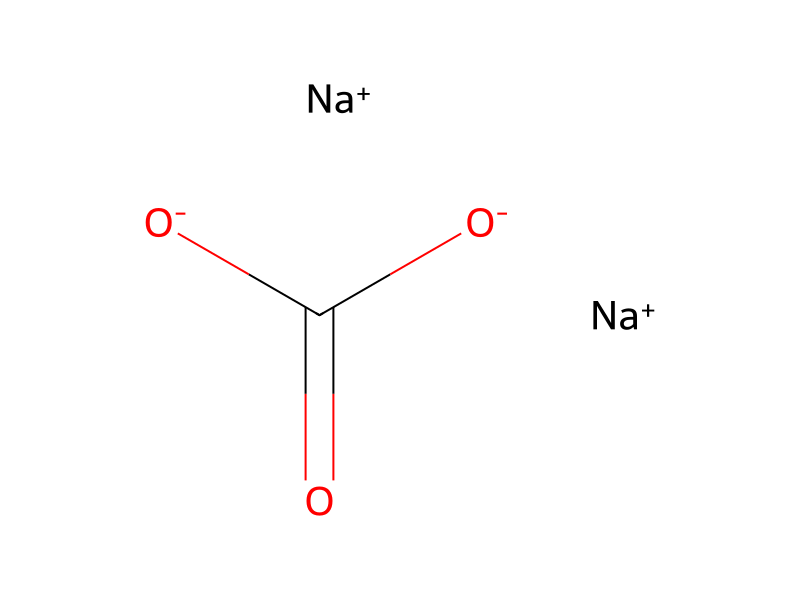
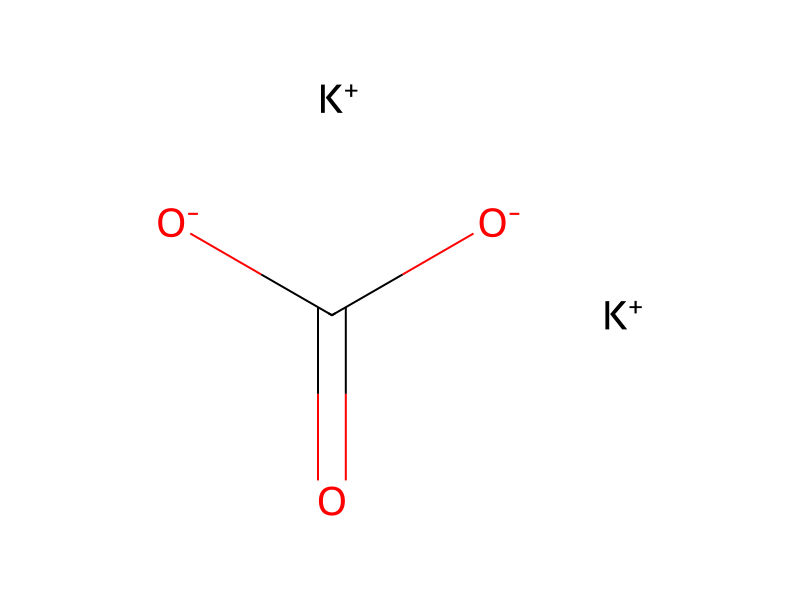
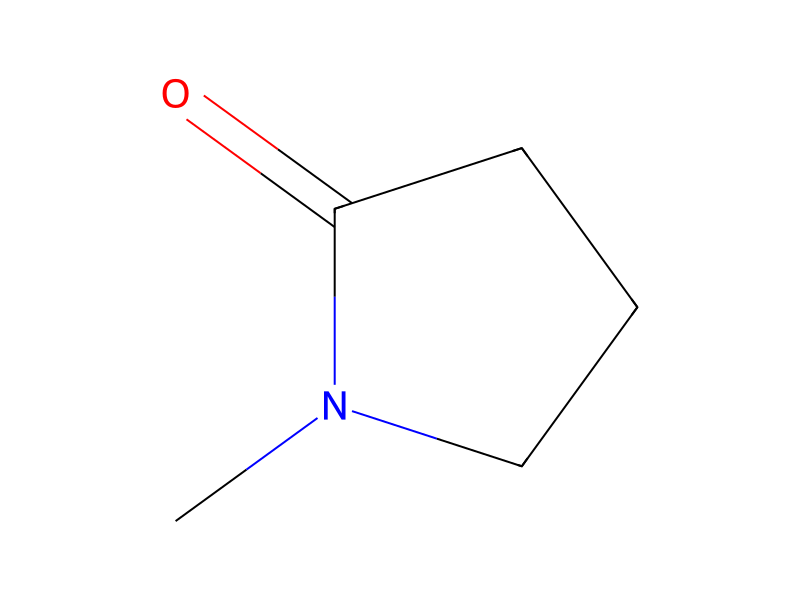
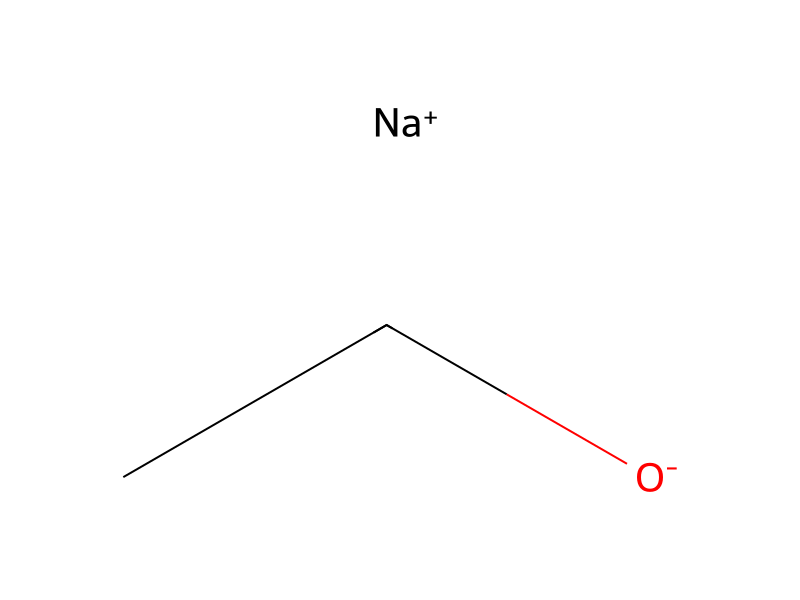
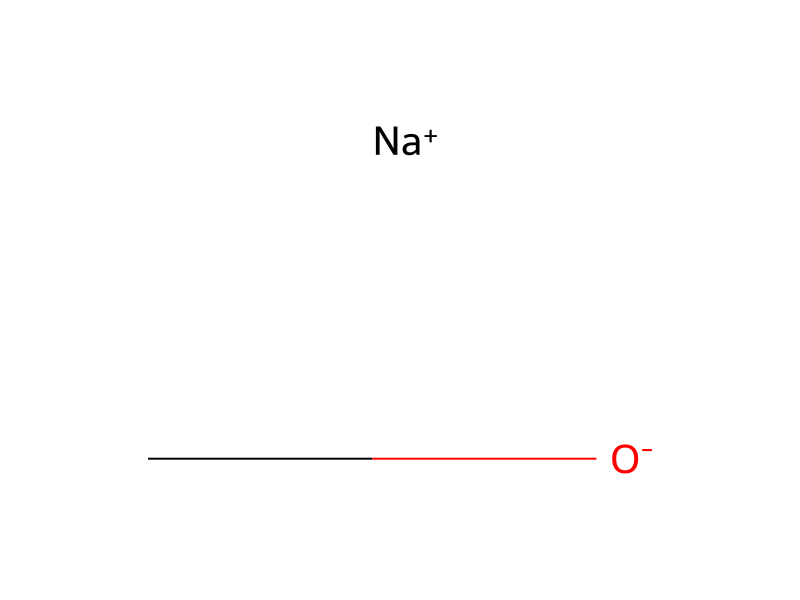
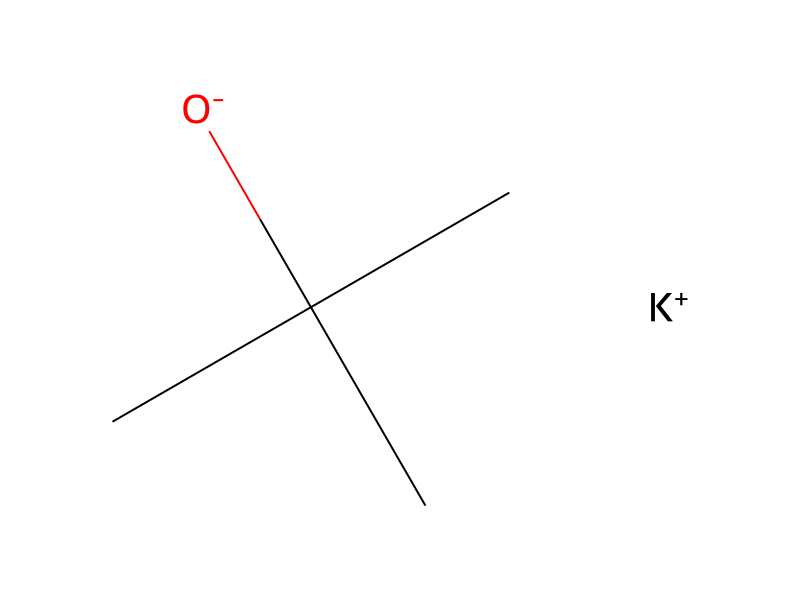
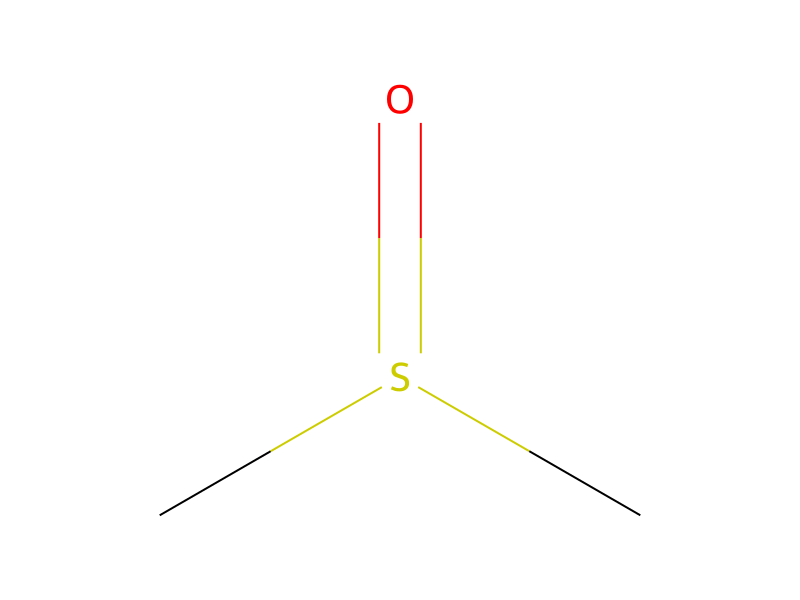
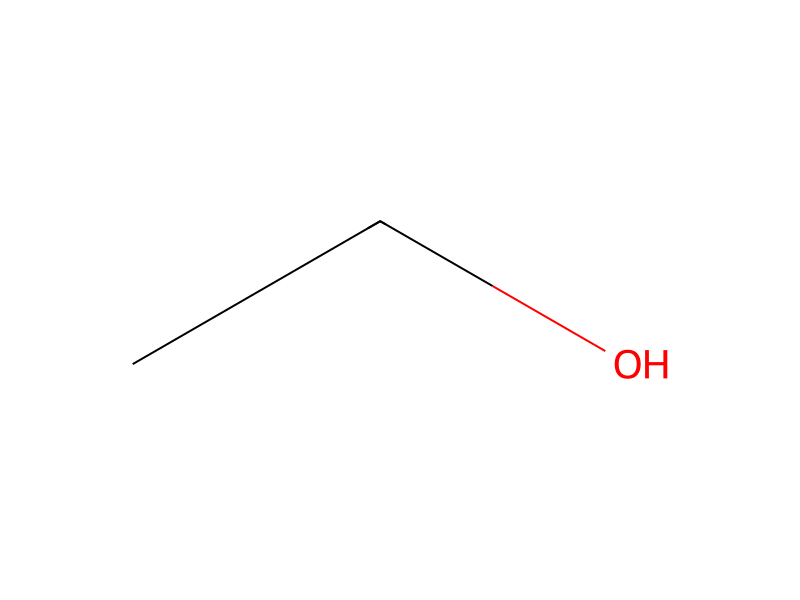
[C:1]([CH2:3][C:4]([NH2:6])=[O:5])#[N:2].O=O.C[O-].[Na+].[O-]CC.[Na+].[CH3:16][C:17]([CH3:20])([O-])C.[K+].C(=O)([O-])[O-].[K+].[K+].C(=O)([O-])[O-].[Na+].[Na+].C[N:35]1CC[CH2:37][C:36]1=[O:40]>C(O)C.CO.CS(C)=O.CN(C)C=O>[NH2:35][C:36]([CH2:37][O:5][C:4]1[C:3]([C:1]#[N:2])=[CH:20][CH:17]=[CH:16][N:6]=1)=[O:40]Participants
Reactant 8


Product 1

Reagents, catalysts & solvents 4
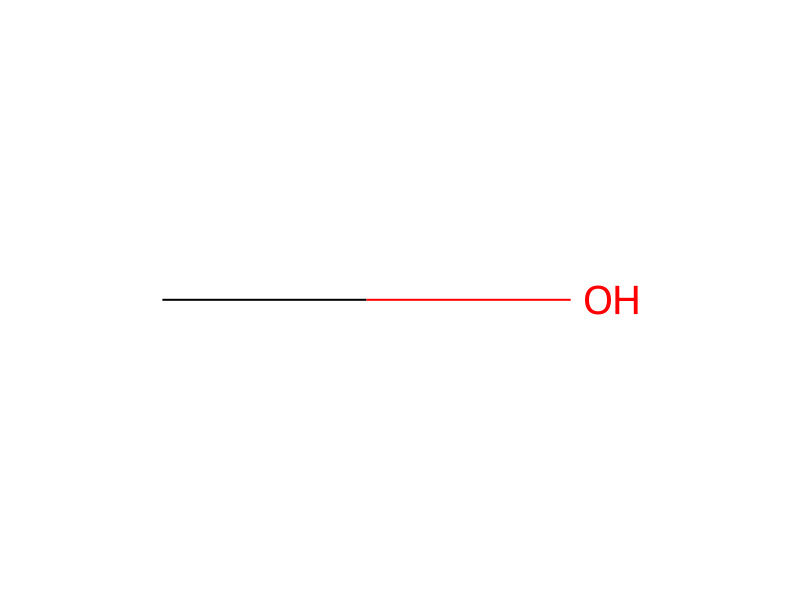
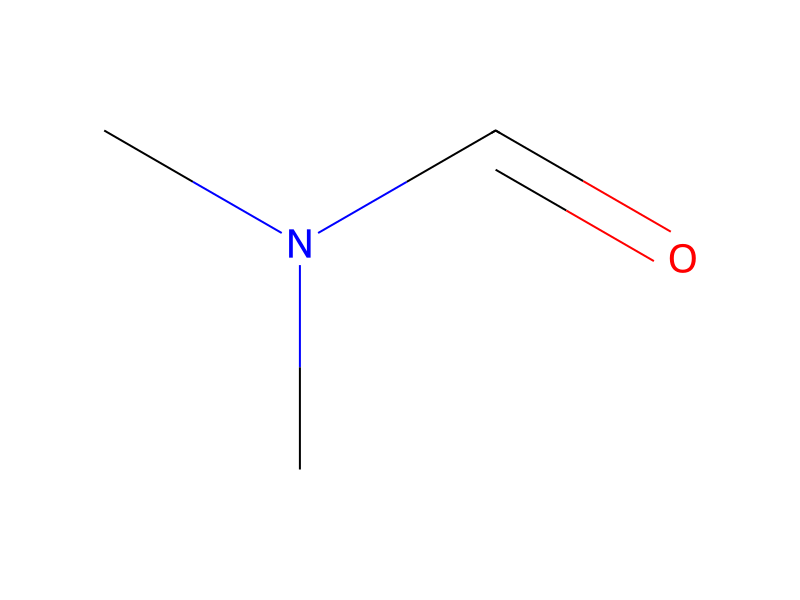
Procedure
In the formula, R3a, R4a and X4 have the same meanings as defined above; and R2a represents a C6-14 aromatic hydrocarbon cyclic group which may have a substituent group or a 5- to 14-membered aromatic heterocyclic group which may have a substituent group. The compound (xxv) according to the present invention can be produced from (xviii) and (xix) through steps 9-(1) to 9-(6) (intermediates (xx) to (xxiv)). The compound (xx) can be produced by dehydrating condensation of (xviii) and (xix) in the presence of a base (step 9-(1)). The base used in the reaction varies depending on the starting material, the solvent used etc., and is not particularly limited so long as it is inert to the reaction. Preferably, inorganic salts such as potassium hydroxide or sodium hydroxide may be proposed. The solvent used varies depending on the starting material, reagents etc., and is not particularly limited insofar as it is inert to the reaction and dissolves the starting material to a certain degree. Preferably, a mixed solvent of an alcohol such as ethanol and water may be proposed. The 2-oxo-1,2-dihydro-3-pyridylcarbonitrile derivative (xxi) can be produced by reacting (xx) with 2-cyanoacetamide in the presence of a base (step 9-(2)). The reaction can be promoted in an oxygen atmosphere. The base used varies depending on the starting material, the solvent used etc., and is not particularly limited insofar as the reaction is not inhibited. Preferably, an alkali metal alkoxide such as sodium methoxide, sodium ethoxide or potassium tert-butoxide may be proposed. Otherwise, using alkali metal carbonates such as potassium carbonate or sodium carbonate can also bring about a preferable result. The solvent used varies depending on the starting material, reagents etc., and is not particularly limited insofar as it is inert to the reaction and dissolves the starting material to a certain degree. Preferably, N,N-dimethylformamide, N-methylpyrrolidone, dimethyl sulfoxide, methanol, ethanol etc. may be proposed. The reaction temperature is preferably room temperature to 120° C., more preferably around room temperature. The compound (xxii) can be produced by alkylating an oxygen atom at the 2-position in (xxi) with 2-halogenoacetamide in the presence of a base (step 9-(3)). The 2-halogenoacetamide used varies depending on the starting material, the solvent used etc., and is not particularly limited so long as it is inert to the reaction. The reaction conducted by using 2-chloroacetamide is preferred, and conducted by further adding sodium iodide is more preferred. The base used varies depending on the starting material, the solvent used etc., and is not particularly limited so long as it is inert to the reaction. Preferably, sodium hydride, sodium hydroxide, potassium hydroxide, sodium bicarbonate, sodium carbonate and potassium carbonate may be proposed. The solvent used varies depending on the starting material, reagents etc., and is not particularly limited insofar as it is inert to the reaction and dissolves the starting material to a certain degree. Preferably, ketones such as acetone or methyl ethyl ketone, alcohols such as methanol or ethanol, ethers such as tetrahydrofuran, dioxane, dimethoxyethane or diethylene glycol dimethyl ether, N,N-dimethylformamide, dimethyl sulfoxide, 1-methyl pyrrolidinone etc. may be proposed. The reaction temperature is usually 0 to 100° C. The compound (xxiii) can be produced by transaminating the 2-aminocarbonylmethyloxy-3-cyanopyridine derivative (xxii) in the presence of a base in a solvent (step 9-(4)). The base used varies depending on the starting material, the solvent used etc., and is not particularly limited so long as it is inert to the reaction. Preferably, for example, sodium hydride, sodium hydroxide, potassium hydroxide, sodium bicarbonate, sodium carbonate, potassium carbonate etc. may be proposed. The solvent used varies depending on the starting material, reagents etc., and is not particularly limited insofar as it is inert to the reaction and dissolves the starting material to a certain degree. Preferably, N,N-dimethylformamide, dimethyl sulfoxide, 1-methylpyrrolidinone etc. may be proposed, other than ketones such as acetone or methyl ethyl ketone, alcohols such as methanol, ethanol, propanol or butanol, ethers such as tetrahydrofuran, dioxane, dimethoxyethane or diethylene glycol dimethyl ether maybe proposed. The reaction temperature is usually room temperature to 150° C. The compound (xxiv) can be produced by halogenating the 5-position of the pyridine ring in the 2-aminonicotinonitrile derivative (xxiii) with a halogenating agent in a solvent (step 9-(5)). The halogenating agent used varies depending on the starting material, the solvent used etc., and is not particularly limited so long as it is inert to the reaction. Preferably, N-bromosuccinimide, bromine etc. may be proposed. Further, the solvent used varies depending on the starting material, reagents etc., and is not particularly limited insofar as it it inert to the reaction and dissolves the starting material to a certain degree. Preferably, alcohols such as methanol or ethanol, ethers such as tetrahydrofuran, dioxane, dimethoxyethane or diethylene glycol dimethyl ether, N,N-dimethylformamide, 1-methyl pyrrolidinone etc. may be proposed. The reaction temperature is usually −20° C. to room temperature. The compound (xxv) according to the present invention can be produced by reacting the 2-amino-5-halogenonicotinonitrile derivative (xxiv) with the aryl tin reagent obtained in Production Process 5 in the presence of a palladium catalyst in a solvent, to introduce an aromatic group into the 5-position of the pyridine ring in (xxiv) (step 9-(6)). The palladium catalyst used varies depending on the starting material, the solvent used etc., and is not particularly limited so long as it is inert to the reaction. Preferably, dichlorobis (triphenylphoshine) palladium (II), palladium (II) acetate, tetrakis(triphenylphosphine) palladium (0), tris(dibenzylidene acetone) dipalladium (0), dichlorobis (acetonitrile) palladium (II) etc. may be proposed. Further, the solvent used varies depending on the starting material, reagents etc., and is not particularly limited insofar as it is inert to the reacton and dissolves the starting material to a certain degree. Preferably, alcohols such as methanol, ethanol, propanol or butanol, ethers such as tetrahydrofuran, dioxane, dimethoxyethane or diethylene glycol dimethyl ether, toluene, xylene, N,N-dimethylformamide, 1-methyl pyrrolidinone etc. may be proposed The reaction temperature is usually room temperature to 150° C.
Workup
- customThe reaction
- customis inert to the reaction
- dissolutiondissolves the starting material to a certain degree
- customis preferably room temperature to 120° C., more preferably around room temperature
Sources & evidence
- ORD record
- ord-2ecf125700ae4635834fc5278578c5ea
- Source dataset
- uspto-grants-2004_06
- Patent number
- US06750232B2
Reaction notes
Loading…