Hydrochloric Acid → HCID 13572894, compound
Reaction equation

Br[C:2]1[CH:7]=[CH:6][CH:5]=[CH:4][C:3]=1[Cl:8].[CH3:9][Si:10]([C:13]#[CH:14])([CH3:12])[CH3:11].Cl>C(N(CC)CC)C.[Cu]I.C1(P(C2C=CC=CC=2)C2C=CC=CC=2)C=CC=CC=1>[Cl:8][C:3]1[CH:4]=[CH:5][CH:6]=[CH:7][C:2]=1[C:14]#[C:13][Si:10]([CH3:12])([CH3:11])[CH3:9]Participants
7
Reactant 3

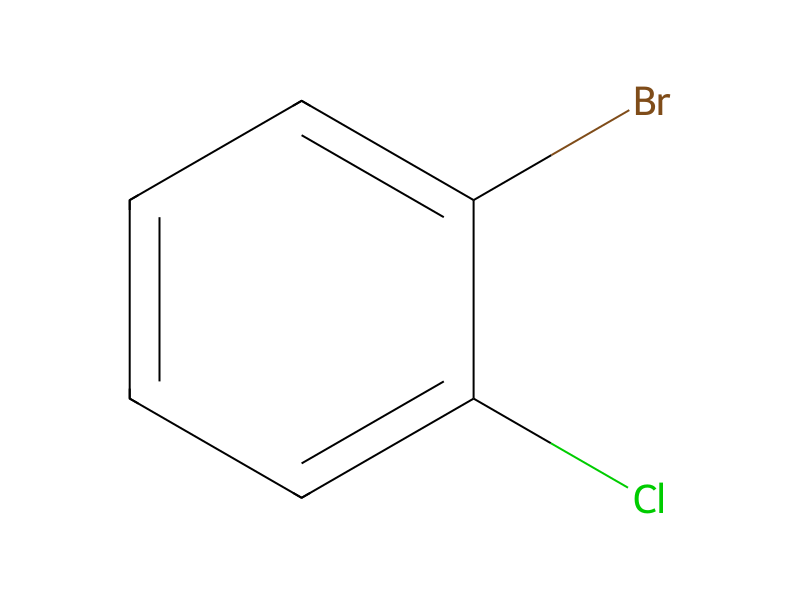

Product 1

Reagents, catalysts & solvents 3



Procedure
2-Bromochlorobenzene (54.1 ml, 0.46 mol) and trimethylsilylacetylene (72 ml, 0.51 mol) were dissolved in triethylamine (250 ml). Triphenylphosphine (0.4 g, 1.5 mmol), copper (I) iodide (0.3 g, 1.6 mmol) and bistriphenyphosphinepalladium (II) dichloride (0.5 g, 0.67 mmol) were added and the mixture was heated under reflux for 18 h. The reaction mixture was cooled to ambient temperature and carefully added to 10% hydrochloric acid (480 ml). The product was extracted into hexane (3×200 ml), the extracts were washed with 10% hydrochloric acid (200 ml) and water (2×200 ml) then dried (MgSO4) and evaporated in vacuo to give (2-chlorophenylethynyl)-trimethylsilane (95.4 g) as an orange oil, which was used without further purification.
Workup
- temperaturethe mixture was heated
- temperatureunder reflux for 18 h
- extractionThe product was extracted into hexane (3×200 ml)
- washthe extracts were washed with 10% hydrochloric acid (200 ml) and water (2×200 ml)
- dry with materialthen dried (MgSO4)
- customevaporated in vacuo
Sources & evidence
- ORD record
- ord-1e90292fad9641c0b8dd1b25c6b06b53
- Source dataset
- uspto-grants-2011_11
- Patent number
- US08058283B2
Reaction notes
Loading…