p-Toluenesulfonic acid → Propylene glycol methyl ether acetate
Reaction equation

[CH:1]([O:3][CH2:4][CH3:5])=[CH2:2].[C:6]([O:9][CH2:10][CH3:11])(=[O:8])[CH3:7].[C:12]1([CH3:22])[CH:17]=[CH:16]C(S(O)(=O)=O)=[CH:14][CH:13]=1>C(N(CC)CC)C>[CH2:1]([O:3][CH2:4][CH2:5][O:9][C:10]1[CH:11]=[CH:22][C:12]([CH:17]=[CH2:16])=[CH:13][CH:14]=1)[CH3:2].[OH:3][C:4]1[CH:5]=[CH:22][C:12]([CH:17]=[CH2:16])=[CH:13][CH:14]=1.[C:6]([O:9][CH:10]([CH3:12])[CH2:11][O:3][CH3:1])(=[O:8])[CH3:7]Participants
6

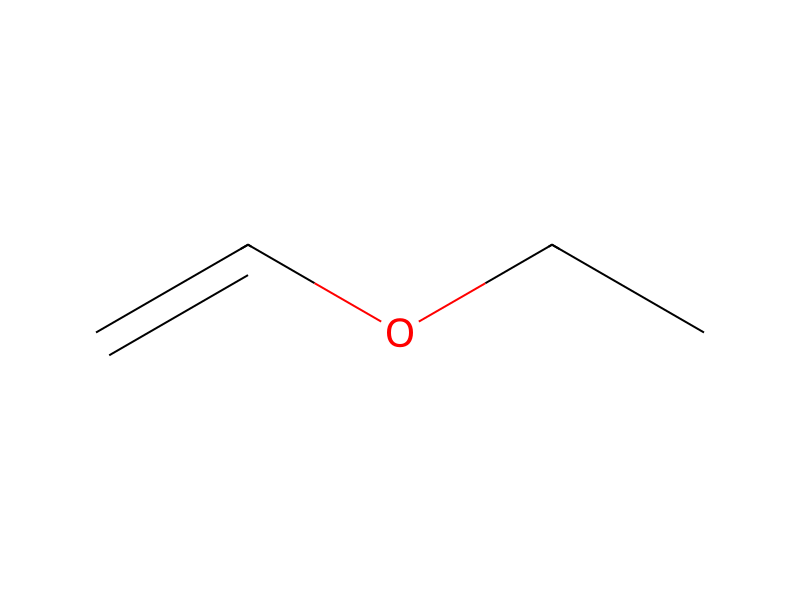




Procedure
Into a 500 ml-volume three-neck flask, 72.1 g of poly-4-hydroxystyrene (VP-8000, produced by Nippon Soda Co., Ltd.), 16.4 g of ethyl vinyl ether and 300 ml of ethyl acetate were charged. A catalytic amount of para-toluenesulfonic acid was added thereto, and reaction was allowed to proceed at room temperature for 3 hours in a nitrogen stream. After adding a small amount of triethylamine, the mixture was washed with pure water. Propylene glycol monomethyl ether acetate was added to the ethyl acetate layer, and ethyl acetate was removed by distillation under reduced pressure to obtain Polymer A′1-9 (p-1-ethoxyethoxystyrene/p-hydroxystyrene) as a propylene glycol monomethyl ether acetate solution.
Workup
- customreaction
- washthe mixture was washed with pure water
- additionPropylene glycol monomethyl ether acetate was added to the ethyl acetate layer, and ethyl acetate
- customwas removed by distillation under reduced pressure
Sources & evidence
- ORD record
- ord-a6e85b44491e4f7b8c6971d0e352f9fc
- Source dataset
- uspto-grants-2015_05
- Patent number
- US09034440B2
Reaction notes
Loading…