Hydrochloric Acid → HCID 23102719, compound
Reaction equation

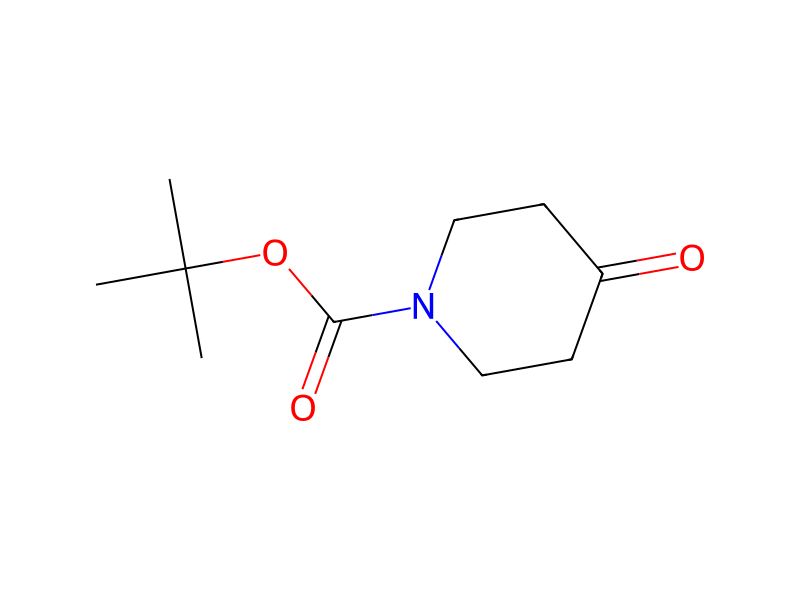
C(OC([N:8]1[CH2:13][CH2:12][C:11](=O)[CH2:10][CH2:9]1)=O)(C)(C)C.[CH2:15]([NH2:19])[CH2:16][CH2:17][CH3:18].C(O[BH-](OC(=O)C)OC(=O)C)(=O)C.[Na+].C(OC(N1CCC(N)CC1)=O)(C)(C)C.[N-:48]=[C:49]=[O:50].[F:51][C:52]1[CH:57]=[C:56]([F:58])[CH:55]=[CH:54][CH:53]=1.[ClH:59]>C(O)(=O)C.CN(C)C=O.C(N(CC)CC)C>[ClH:59].[CH2:15]([N:19]([CH:11]1[CH2:10][CH2:9][NH:8][CH2:13][CH2:12]1)[C:49]([NH:48][C:55]1[CH:54]=[CH:53][C:52]([F:51])=[CH:57][C:56]=1[F:58])=[O:50])[CH2:16][CH2:17][CH3:18]Participants
Reactant 6





Product 1

Reagents, catalysts & solvents 3



Procedure
N-t-butoxycarbonylpiperidin-4-one and n-butylamine were subjected to reductive alkylation in acetic acid and dimethylformamide at room temperature using sodium triacetoxyborohydride. The obtained 1-t-butoxycarbonyl-4-aminopiperidine was reacted with 2,4-difluorobenzenisocyanate in dimethylformamide in the presence of triethylamine. The reaction mixture was deprotected by treatment with Hydrochloric acid to give N-butyl-N′-(2,4-difluorophenyl)-N-piperidin-4-ylurea hydrochloride. By the same procedure as described in Example 1 and the conversion to hydrochloride salt by a conventional method, using N-butyl-N′-(2,4-difluorophenyl)-N-piperidin-4-ylurea and 4-(4-formylphenoxy)benzoic acid, the compound of the present invention (48 mg) having the following physical data was obtained.
Workup
- customat room temperature
Sources & evidence
- ORD record
- ord-0fa160dba80044a49b898eedf102ca01
- Source dataset
- uspto-grants-2011_03
- Patent number
- US07910741B2
Reaction notes
Loading…