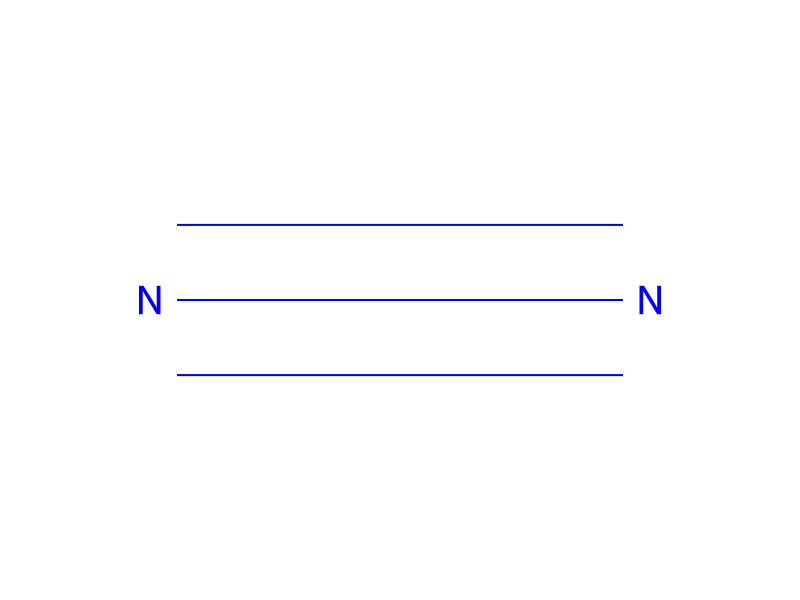
Nitrogen → HCID 20195687, compound
Reaction equation

N#N.[CH:3]1[C:6]2[CH:7]=[CH:8][C:9]([N:11]3[C:15](=[O:16])[C:14]4=[CH:17][C:18](Br)=[CH:19][CH:20]=[C:13]4[C:12]3=[O:22])=[CH:10][C:5]=2[CH:4]=1.C1(P(C2C=CC=CC=2)C2C=CC=CC=2)C=CC=CC=1.[CH3:42][Si:43]([C:46]#[CH:47])([CH3:45])[CH3:44]>C([O-])(=O)C.[Pd+2].C([O-])(=O)C.CCN(CC)CC>[CH:3]1[C:6]2[CH:7]=[CH:8][C:9]([N:11]3[C:15](=[O:16])[C:14]4=[CH:17][C:18]([C:47]#[C:46][Si:43]([CH3:45])([CH3:44])[CH3:42])=[CH:19][CH:20]=[C:13]4[C:12]3=[O:22])=[CH:10][C:5]=2[CH:4]=1Participants






Procedure
In a 100 ml 3 necked round-bottomed flask, equipped with a thermometer, reflux condensor and N2 -adaptor, were placed N-4-benzocyclobutenyl 4-bromophthalimide (4.00 g, 12.2 mmol), palladium acetate (24 mg), triphenylphosphine (48 mg) and 60 ml of dry NEt3. The resultant reaction mixture was refluxed under N2 for about 15 minutes. Then, it was allowed to cool slowly to room temperature under N2. Trimethylsilylacetylene (2.50g, 25.4 mmol) was introduced into the reaction mixture via the reflux condensor. Immediately, the quantitative amount of white solids precipitated. The reaction mixture was then heated at 100° C. for about 3 hrs and stirred at room temperature overnight under N2. The brown heterogeneous mixture was poured into about 300 ml of H2O and extracted with CH2Cl2 (2×100 ml+2×50 ml). The CH2Cl2 extract was then washed with 200 ml H2O and dried over MgSO 4. Upon removal of the solvent, a mixture of white and brown solids was obtained. The mixture was washed with approximately 250 ml of H2O and air dried for an hour. It was then dissolved in 50 ml CH2Cl2 and the resultant solution was passed through a short column containing 25 g of silica gel saturated with hexane. Elution with 1:1 CH2Cl2 /hexane led to the isolation of microcrystalline tan solid from the first fraction. Yield=4.0 g (95%) mp=192-193° C. Calc. for C21H19NO2Si: 73.01% C; 5.54% H; 4.05% N. Found: 72.95% C; 5.45% H; 4.01% N. Mass Spectroscopy: 345 (M+, 100%). Proton NMR (CDCl3) 0.30 (Singlet, Me3Si--); 3.24 (Singlet, alicyclic protons); 7.10-7.29, 7.92-8.06 (complex, aromatic protons). IR(KBr): 2960 m, 2930 m (aliphatic and alicyclic C--H stretches); 2175 w (C≡C stretch); 1712, 1772 (symmetric and asymmetric stretches of imide group).
Workup
- customThe resultant reaction mixture
- temperaturewas refluxed under N2 for about 15 minutes
- customImmediately, the quantitative amount of white solids precipitated
- temperatureThe reaction mixture was then heated at 100° C. for about 3 hrs
- additionThe brown heterogeneous mixture was poured into about 300 ml of H2O
- extractionextracted with CH2Cl2 (2×100 ml+2×50 ml)
- extractionThe CH2Cl2 extract
- washwas then washed with 200 ml H2O
- dry with materialdried over MgSO 4
- customUpon removal of the solvent
- additiona mixture of white and brown solids
- customwas obtained
- washThe mixture was washed with approximately 250 ml of H2O and air
- customdried for an hour
- dissolutionIt was then dissolved in 50 ml CH2Cl2
- additioncontaining 25 g of silica gel saturated with hexane
- washElution with 1:1 CH2Cl2 /hexane
Sources & evidence
- ORD record
- ord-3d6d132e29df459a87eac8a7149d9cd5
- Source dataset
- uspto-grants-1987_06
- Patent number
- US04675370
Reaction notes
Loading…