Sodium Carbonate → 2-[5-Amino-6-(5-phenyl-1,3,4-thiadiazol-2-yl)pyrazin-2-yl]-5-(1,4-diazepane-1-carbonyl)benzonitrile
Reaction equation

Br[C:2]1[CH:11]=[CH:10][C:5]([C:6]([O:8]C)=O)=[CH:4][C:3]=1[C:12]#[N:13].[C:14]([O-])(=O)[CH3:15].[K+].CC1(C)C(C)(C)OB(B2O[C:30]([CH3:33])(C)[C:29]([CH3:35])([CH3:34])O2)O1.[C:37]1(P(C2C=CC=CC=2)C2C=CC=CC=2)C=CC[CH:38]=1.C1(P(C2C=CC=CC=2)C2C=CC=CC=2)C=CC=CC=1.C(=O)([O-])[O-].[Na+].[Na+].Br[C:81]1[N:82]=[C:83]([C:88]2[S:89]C(C3C=CC=CC=3)=[N:91][N:92]=2)[C:84]([NH2:87])=[N:85][CH:86]=1.[NH:99]1[CH2:105]CC[NH:102][CH2:101][CH2:100]1.CN(C(ON1N=NC2C=CC=CC1=2)=[N+](C)C)C.[B-](F)(F)(F)F>O1CCOCC1.C(OCC)(=O)C.Cl[Pd]Cl.[Fe].[Pd].ClCCl>[NH2:87][C:84]1[N:85]=[CH:86][C:81]([C:2]2[CH:11]=[CH:10][C:5]([C:6]([N:102]3[CH2:15][CH2:14][CH2:105][NH:99][CH2:100][CH2:101]3)=[O:8])=[CH:4][C:3]=2[C:12]#[N:13])=[N:82][C:83]=1[C:88]1[S:89][C:35]([C:29]2[CH:30]=[CH:33][CH:38]=[CH:37][CH:34]=2)=[N:91][N:92]=1Participants
Reactant 9
 HCID 10340Sodium Carbonate
 HCID 11776Triphenylphosphine
 HCID 68163Hexahydro-1,4-diazepine
 HCID 517044Potassium Acetate
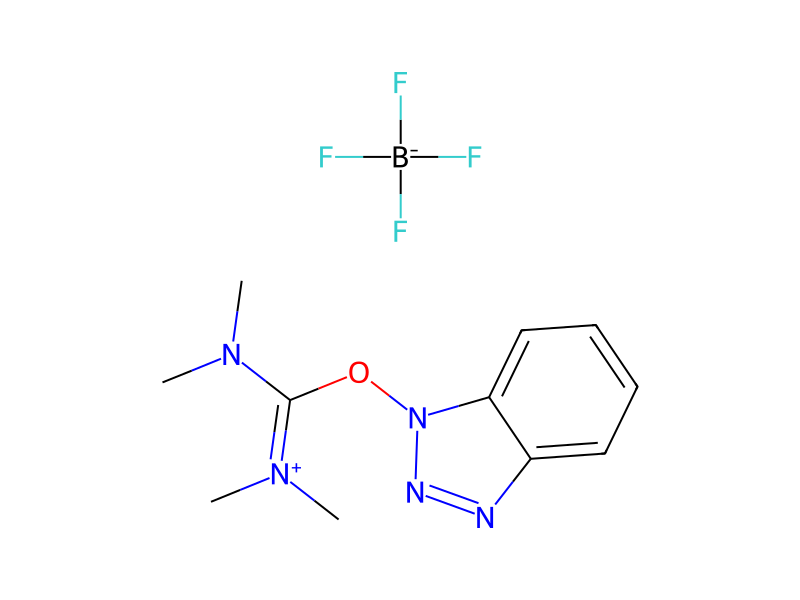 HCID 2733207O-(Benzotriazol-1-yl)-N,N,N',N'-tetramethyluronium tetrafluoroborate
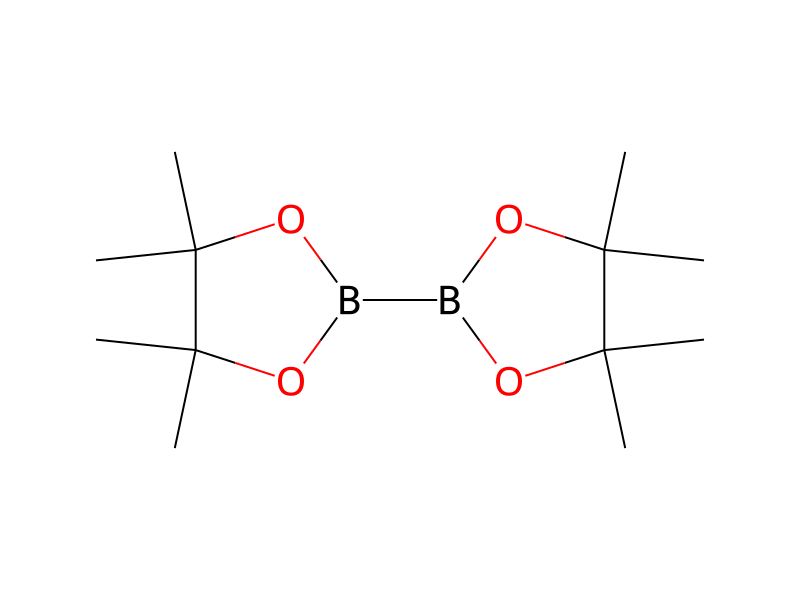 HCID 2733548Bis(pinacolato)diborane
 HCID 3524393Cyclopenta-1,4-dien-1-yl(diphenyl)phosphane
 HCID 594718915-Bromo-3-(5-phenyl-1,3,4-thiadiazol-2-yl)pyrazin-2-amine
 HCID 67424845Methyl 4-bromo-3-cyanobenzoate
Product 1

Reagents, catalysts & solvents 6





Conditions
- Temperature
- 140 °C
Procedure
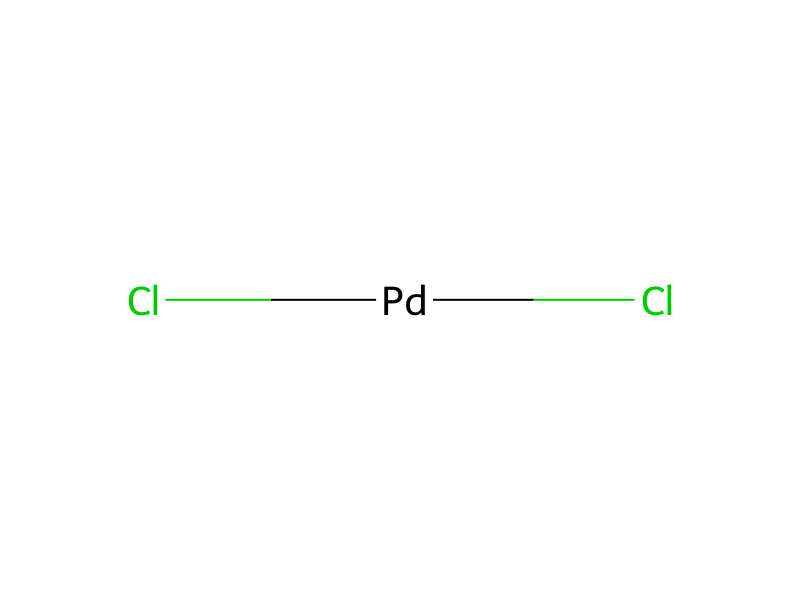
A mixture of methyl 4-bromo-3-cyano-benzoate (100 mg, 0.4166 mmol), potassium acetate (122.7 mg, 1.250 mmol), 4,4,5,5-tetramethyl-2-(4,4,5,5-tetramethyl-1,3,2-dioxaborolan-2-yl)-1,3,2-dioxaborolane (158.7 mg, 0.6249 mmol) and 1-cyclopenta-1,4-dienyl-diphenyl-phosphane; dichloromethane; dichloropalladium; iron (34.02 mg, 0.04166 mmol) was heated in dioxane (10 mL) at 80° C. for 2 h. After this time, the reaction mixture was cooled and palladium; triphenylphosphane (48.14 mg, 0.04166 mmol), sodium carbonate (625.0 μL of 2 M, 1.250 mmol) and 5-bromo-3-(5-phenyl-1,3,4-thiadiazol-2-yl)pyrazin-2-amine (139.2 mg, 0.4166 mmol) were added and heated at 140° C. under microwave conditions for 1 h. After cooling to room temperature, the resulting carboxylic acid was filtered off as brown solid. The solid was dissolved in DMF (3 mL) and 1,4-diazepane (208.3 mg, 2.083 mmol) and TBTU (267.5 mg, 0.8332 mmol) were added. The resulting mixture was stirred at room temperature for 2 h then diluted with ethyl acetate (5 mL), and the organic extract washed with water (1×5 mL) and brine (1×5 mL), dried over MgSO4 and concentrated in vacuo to a solid. This solid was purified by reverse phase preparative HPLC [Waters Sunfire C18, 10 μM, 100 Å column, gradient 10%-95% B (solvent A: 0.05% TFA in water; solvent B: CH3 CN) over 16 minutes at 25 mL/min]. The product fractions were collected and lypholised to give the product as a yellow solid (60 mg, 25% yield); 1H NMR (400.0 MHz, DMSO) d 1.9-2.1 (m, 2H), 3.3-3.4 (m, 4H), 3.5-3.55 (m, 2H), 3.65-3.7 (m, 1H), 3.7-3.75 (m, 1H), 3.8-3.9 (m, 2H), 7.5-7.6 (m, 3H), 7.8 (d, 1H), 8.1-8.22 (m, 3H), 8.25 (br s, 1H), 8.75 (br s, 2H) and 8.8 (s, 1H) ppm; MS (ES+) 483.2
Workup
- temperatureAfter this time, the reaction mixture was cooled
- temperatureAfter cooling to room temperature
- filtrationthe resulting carboxylic acid was filtered off as brown solid
- dissolutionThe solid was dissolved in DMF (3 mL)
- extractionthe organic extract
- washwashed with water (1×5 mL) and brine (1×5 mL)
- dry with materialdried over MgSO4
- concentrationconcentrated in vacuo to a solid
- customThis solid was purified by reverse phase preparative HPLC [Waters Sunfire C18, 10 μM, 100 Å column, gradient 10%-95% B (solvent A: 0.05% TFA in water; solvent B: CH3 CN) over 16 minutes at 25 mL/min]
- customThe product fractions were collected
Sources & evidence
- ORD record
- ord-6d8f1c17d2b44073a926e9673c0dd7d9
- Source dataset
- uspto-grants-2014_09
- Patent number
- US08841308B2
Reaction notes
Loading…