1-Propanol → HCID 89630011, compound
Reaction equation

[CH3:1][N:2]1[CH:10]=[C:9]2[C:4]([CH:5]=[C:6]([C:11]3[C:12]4[C:19]([C:20]([OH:22])=[O:21])=[CH:18][N:17](COCC[Si](C)(C)C)[C:13]=4[N:14]=[CH:15][N:16]=3)[CH:7]=[CH:8]2)=[N:3]1.CN(C(ON1N=N[C:41]2[CH:42]=CC=N[C:40]1=2)=[N+](C)C)C.F[P-](F)(F)(F)(F)F.C(O)CC.CCN(C(C)C)C(C)C.C(=O)(O)[O-].[Na+].[F-].[Cs+].C(O)(C(F)(F)F)=O>CCOC(C)=O.CS(C)=O>[CH3:1][N:2]1[CH:10]=[C:9]2[C:4]([CH:5]=[C:6]([C:11]3[C:12]4[C:19]([C:20]([O:22][CH2:40][CH2:41][CH3:42])=[O:21])=[CH:18][NH:17][C:13]=4[N:14]=[CH:15][N:16]=3)[CH:7]=[CH:8]2)=[N:3]1Participants
Reactant 7
 HCID 10311-Propanol2×
 HCID 6422Trifluoroacetic acid
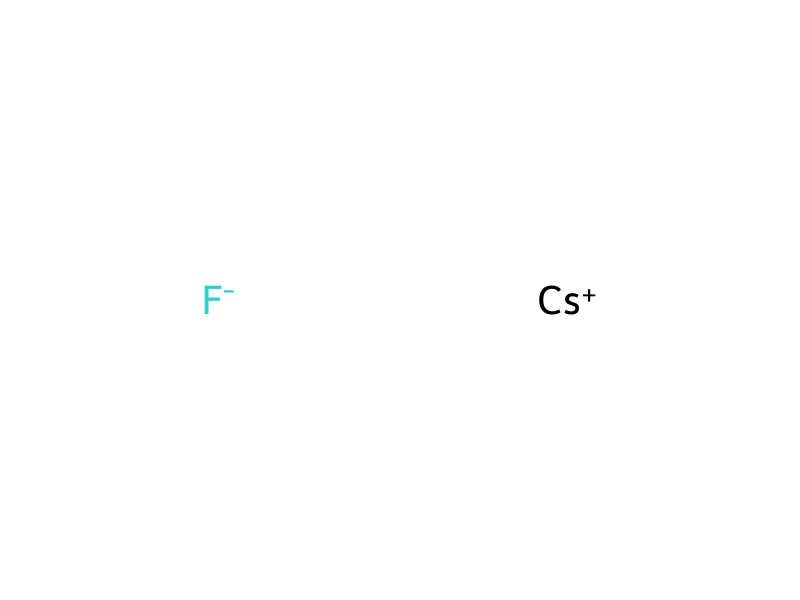 HCID 25953Cesium fluoride
 HCID 81531Diisopropylethylamine2×
 HCID 516892Sodium Bicarbonate
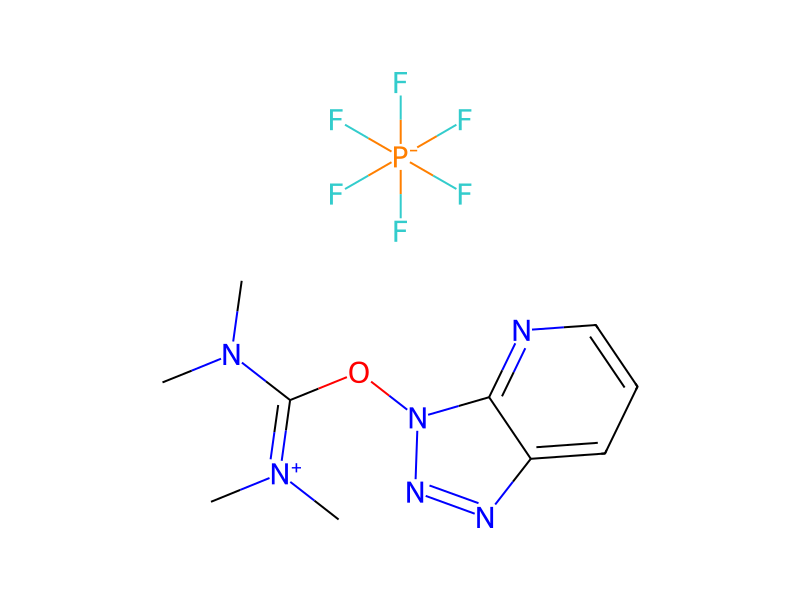 HCID 9886157Methanaminium, N-((dimethylamino)(3H-1,2,3-triazolo(4,5-b)pyridin-3-yloxy)methylene)-N-methyl-, hexafluorophosphate(1-) (1:1)2×
 HCID 89629949HCID 89629949, compound
Product 1

Reagents, catalysts & solvents 2


Procedure
4-(2-Methyl-2H-indazol-6-yl)-7-{[2-(trimethylsilyl)ethoxy]methyl}-7H-pyrrolo[2,3-d]pyrimidine-5-carboxylic acid (50 mg, 0.12 mmol), HATU (90 mg, 0.24 mmol), and propanol (14.2 mg, 0.236 mmol) were added to DMSO (1.0 mL), followed by Hunig's base (0.103 mL, 0.590 mmol). The reaction was then stirred for 17 hours at room temperature at which point additional HATU (90 mg, 0.236 mmol), Hunig's base (0.103 mL, 0.590 mmol) and propanol (14.2 mg, 0.236 mmol) were added and the reaction stirred for an additional 17 hours at room temperature. Saturated aqueous sodium bicarbonate and EtOAc were added to the reaction mixture. The organic layer was separated and the aqueous layer extracted with EtOAc (×3). The combined organic layers were then washed with brine, dried with sodium sulfate, filtered and concentrated under reduced pressure. The residue was dissolved in DMSO (1 mL) and CsF (179 mg, 1.18 mmol) was then added. The reaction mixture was heated at 140° C. for 2 hours open to the air. Upon cooling, the solution was made acidic by addition of TFA. The reaction mixture was then filtered and purified by reverse phase HPLC using an acetonitrile gradient in water with 0.1% TFA modifier. Pure fractions were combined and then saturated aqueous sodium bicarbonate was added. The organic layer was separated and the aqueous layer extracted with 3:1 CHCl3:IPA (×3). The combined organic layers were then washed with brine, dried over sodium sulfate, filtered, and concentrated under reduced pressure to afford propyl 4-(2-methyl-2H-indazol-6-yl)-7H-pyrrolo[2,3-d]pyrimidine-5-carboxylate as a solid. LRMS (ESI) calc'd for C18H18N5O2 [M+11]+: 336; found 336. 1H NMR (600 MHz, DMSO-D6) δ 13.01 (s, 1H), 8.91 (s, 1H), 8.40 (s, 1H), 8.30 (s, 1H), 7.78 (s, 1H), 7.76 (d, 1H, J=8.80 Hz), 7.36 (d, 1H, J=8.80 Hz), 4.22 (s, 3H), 3.68 (t, 2H, J=6.45 Hz), 1.03 (m, 2H), 0.55 (t, 3H, J=7.04 Hz).
Workup
- additionwere added
- customThe organic layer was separated
- extractionthe aqueous layer extracted with EtOAc (×3)
- washThe combined organic layers were then washed with brine
- dry with materialdried with sodium sulfate
- filtrationfiltered
- concentrationconcentrated under reduced pressure
- dissolutionThe residue was dissolved in DMSO (1 mL)
- temperatureThe reaction mixture was heated at 140° C. for 2 hours open to the air
- temperatureUpon cooling
- filtrationThe reaction mixture was then filtered
- custompurified by reverse phase HPLC
- additionsaturated aqueous sodium bicarbonate was added
- customThe organic layer was separated
- extractionthe aqueous layer extracted with 3:1 CHCl3
- washThe combined organic layers were then washed with brine
- dry with materialdried over sodium sulfate
- filtrationfiltered
- concentrationconcentrated under reduced pressure
Sources & evidence
- ORD record
- ord-2a981a2c1dec4d44ad44126f76ef29a9
- Source dataset
- uspto-grants-2015_03
- Patent number
- US08993756B2
Reaction notes
Loading…