Hydrochloric Acid → HCID 89988453, compound
Reaction equation

[F:1][C:2]([F:14])([F:13])[CH:3]([OH:12])[CH2:4][C:5]1([CH3:11])[O:10][CH2:9][CH2:8][CH2:7][O:6]1.C(OC(C)C)(C)C.C([N-]C(C)C)(C)C.[Li+].[C:30]12([NH:40][C:41](=[O:49])[C:42]([F:48])([F:47])[S:43](F)(=[O:45])=[O:44])[CH2:39][CH:34]3[CH2:35][CH:36]([CH2:38][CH:32]([CH2:33]3)[CH2:31]1)[CH2:37]2.Cl>C(OCC)(=O)C.O1CCCC1>[C:30]12([NH:40][C:41](=[O:49])[C:42]([F:47])([F:48])[S:43]([O:12][CH:3]([CH2:4][C:5]3([CH3:11])[O:6][CH2:7][CH2:8][CH2:9][O:10]3)[C:2]([F:1])([F:13])[F:14])(=[O:44])=[O:45])[CH2:39][CH:34]3[CH2:33][CH:32]([CH2:38][CH:36]([CH2:35]3)[CH2:37]1)[CH2:31]2Participants
Reactant 5



Product 1

Reagents, catalysts & solvents 2


Procedure
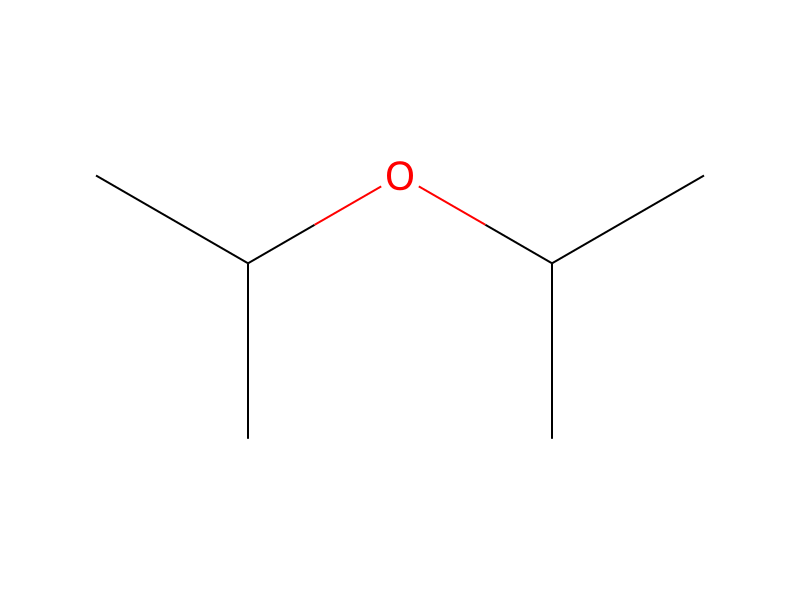
A 200 ml round-bottom flask provided having a thermocouple and a dropping funnel was charged with 5 g (23 mmol) of 1,1,1-trifluoro-3-(2-methyl-1,3-dioxan-2-yl)propan-2-ol and 40 g of diisopropyl ether. To the flask, 24.5 ml of 1 mol/L lithium diisopropylamide was added dropwise over 30 minutes in a nitrogen atmosphere at −30° C. or lower (thereby obtaining a solution “C”). The solution was stirred for 30 minutes after the termination of the dropwise addition, followed by increasing the temperature of the solution to room temperature and then stirring it for additional 1 hour. Another 200 ml round-bottom flask provided having a thermocouple and a dropping funnel was charged with 8.0 g of 2-(adamant-1-ylamino)-1,1-difluoro-2-oxoethanesulfonyl fluoride and 30 g of tetrahydrofuran and cooled to −30° C. in a nitrogen atmosphere. To this solution, the previously prepared solution “C” was added dropwise by using the dropping funnel to such an extent as not to exceed an inner temperature of −20° C. The solution was stirred for 30 minutes after the termination of the dropwise addition, followed by increasing the temperature of the solution to room temperature and then stirring it for additional 3 hours. Thereafter, 50 g of ethyl acetate was added thereto, and then 30 ml of 5% aqueous hydrochloric acid solution was added. An organic phase was separated by using a separatory funnel, followed by rinsing with 30 ml of a saturated aqueous sodium hydrogen carbonate solution and then repeating rinsing with 30 ml of water three times. Distillation of a solvent was performed, and then filtration was performed when crystallization was confirmed, thereby obtaining 8.9 g of a crude crystal. This crystal was recrystallized with 50 g of ethyl acetate thereby obtaining 7.1 g of a target 1,1,1-trifluoro-3-(2-methyl-1,3-dioxan-2-yl)propan-2-yl 2-(adamant -1-ylamino)-1,1-difluoro-2-oxoethanesulfonate (hereinafter referred to as “AA-3”). As a result of analyzing this compound by high performance liquid chromatography, it was confirmed that the purity was 98.8%. Additionally, the yield was 60%.
Workup
- customA 200 ml round-bottom flask provided
- customlower (thereby obtaining a solution “C”)
- additionafter the termination of the dropwise addition
- stirringstirring it for additional 1 hour
- customAnother 200 ml round-bottom flask provided
- temperaturecooled to −30° C. in a nitrogen atmosphere
- additionTo this solution, the previously prepared solution “C” was added dropwise
- customan inner temperature of −20° C
- stirringThe solution was stirred for 30 minutes
- additionafter the termination of the dropwise addition
- temperatureby increasing the temperature of the solution to room temperature
- stirringstirring it for additional 3 hours
- customAn organic phase was separated
- washby rinsing with 30 ml of a saturated aqueous sodium hydrogen carbonate solution
- washrepeating rinsing with 30 ml of water three times
- distillationDistillation of a solvent
- filtrationfiltration
- customwhen crystallization
- customobtaining 8.9 g of a crude crystal
- customThis crystal was recrystallized with 50 g of ethyl acetate
Sources & evidence
- ORD record
- ord-adde927839cc4c75b82c5cffebc4be4d
- Source dataset
- uspto-grants-2016_03
- Patent number
- US09274420B2
Reaction notes
Loading…