HomeMCPWorkbenchSkills
HomeWorkbenchNotificationsMe
llms.txt · MCP GuidePrivacy Policy · Terms of Service · Supportv1.8.3
  1. Home
  2. /Reaction

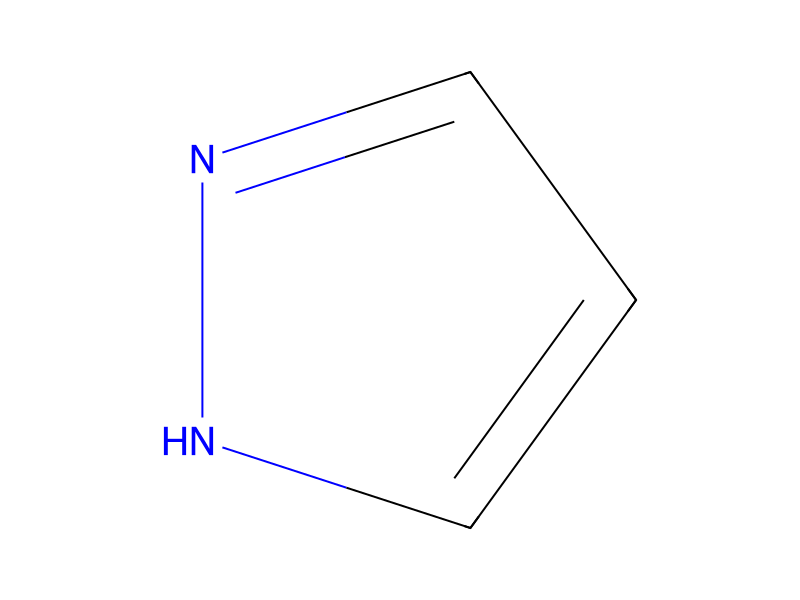
Pyrazole → (2S,4R)-N-(4-Chloro-phenyl)-N-{2-methyl-1-[4-(3-pyrazol-1-yl-propoxy)-benzoyl]-1,2,3,4-tetrahydro-quinolin-4-yl}-acetamide

HRID 1786040
Print

Reaction equation

HRID 1786040 reaction equation
[Cl:1][C:2]1[CH:7]=[CH:6][C:5]([N:8]([C@H:12]2[C:21]3[C:16](=[CH:17][CH:18]=[CH:19][CH:20]=3)[N:15]([C:22](=[O:30])[C:23]3[CH:28]=[CH:27][C:26]([OH:29])=[CH:25][CH:24]=3)[C@@H:14]([CH3:31])[CH2:13]2)[C:9](=[O:11])[CH3:10])=[CH:4][CH:3]=1.C([O-])([O-])=O.[K+].[K+].Br[CH2:39][CH2:40][CH2:41][N:42]1[CH:46]=[CH:45][CH:44]=[N:43]1.BrCCCBr.N1C=CC=N1.[H-].[Na+]>CN(C=O)C.O1CCCC1>[Cl:1][C:2]1[CH:3]=[CH:4][C:5]([N:8]([C@H:12]2[C:21]3[C:16](=[CH:17][CH:18]=[CH:19][CH:20]=3)[N:15]([C:22](=[O:30])[C:23]3[CH:24]=[CH:25][C:26]([O:29][CH2:39][CH2:40][CH2:41][N:42]4[CH:46]=[CH:45][CH:44]=[N:43]4)=[CH:27][CH:28]=3)[C@@H:14]([CH3:31])[CH2:13]2)[C:9](=[O:11])[CH3:10])=[CH:6][CH:7]=1
ParticipantsConditionsProcedureWorkupSources & evidenceReaction notes

Participants

9

Reactant 6

HCID 1048PyrazoleHCID 80011,3-DibromopropaneHCID 11430Potassium CarbonateHCID 24758Sodium hydrideHCID 431353671-(3-Bromopropyl)-1H-pyrazoleHCID 58859774N-(4-chlorophenyl)-N-[(2S,4R)-1-(4-hydroxybenzoyl)-2-methyl-1,2,3,4-tetrahydro-quinolin-4-yl]acetamide

Product

1
HCID 57595396(2S,4R)-N-(4-Chloro-phenyl)-N-{2-methyl-1-[4-(3-pyrazol-1-yl-propoxy)-benzoyl]-1,2,3,4-tetrahydro-quinolin-4-yl}-acetamide

Reagents, catalysts & solvents 2

HCID 6228DimethylformamideSolventHCID 8028TetrahydrofuranSolvent

Conditions

Temperature
70 °C

Procedure

(2S,4R)-N-(4-Chloro-phenyl)-N-[1-(4-hydroxy-benzoyl)-2-methyl-1,2,3,4-tetrahydro-quinolin-4-yl]-acetamide (75 mg, 0.17 mmol) was dissolved in DMF (1 mL) at room temperature. K2CO3 (47 mg, 0.34 mmol) was added followed by 1-(3-bromopropyl)-pyrazole (64 mg, 0.34 mmol) (prepared from the reaction of 1,3-dibromopropane and pyrazole with sodium hydride in tetrahydrofuran). The reaction was allowed to stir at 70° C. for 3 hrs. The reaction mixture was concentrated in vacuo. The residue was partitioned between ethyl acetate and water, then extracted three times with ethyl acetate. Organic layers were washed with brine, dried over MgSO4, filtered and concentrated down. The crude residue was purified by silica gel chromatography (1/99 methanol/dichloromethane-3/97 methanol/dichloromethane gradient) to afford the product.

Workup

  1. concentrationThe reaction mixture was concentrated in vacuo
  2. customThe residue was partitioned between ethyl acetate and water
  3. extractionextracted three times with ethyl acetate
  4. washOrganic layers were washed with brine
  5. dry with materialdried over MgSO4
  6. filtrationfiltered
  7. concentrationconcentrated down
  8. customThe crude residue was purified by silica gel chromatography (1/99 methanol/dichloromethane-3/97 methanol/dichloromethane gradient)
  9. customto afford the product

Sources & evidence

ORD record
ord-3456898986f84a9da8fecfc1c8aecc03
Source dataset
uspto-grants-2009_03
DOI
10.6084/m9.figshare.5104873.v1
Patent number
US07504508B2

Reaction notes

On this pageParticipantsConditionsProcedureWorkupSources & evidenceReaction notes



