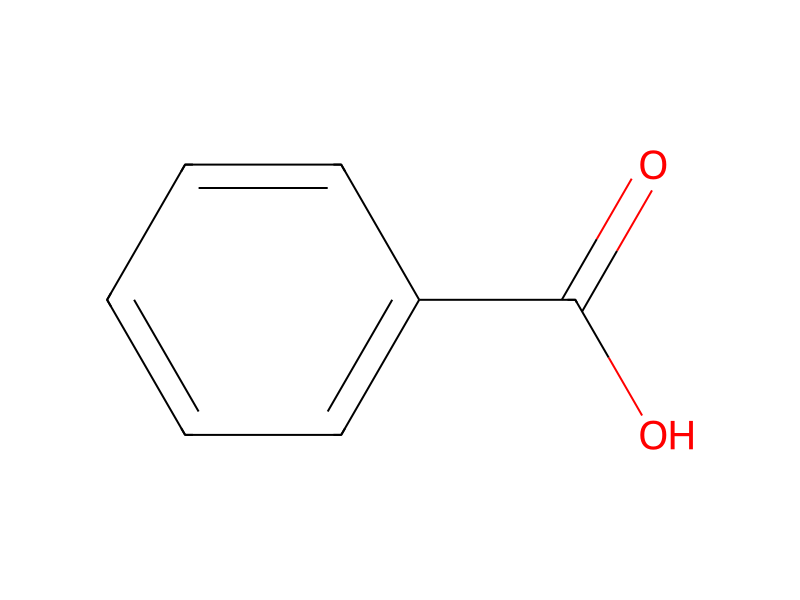
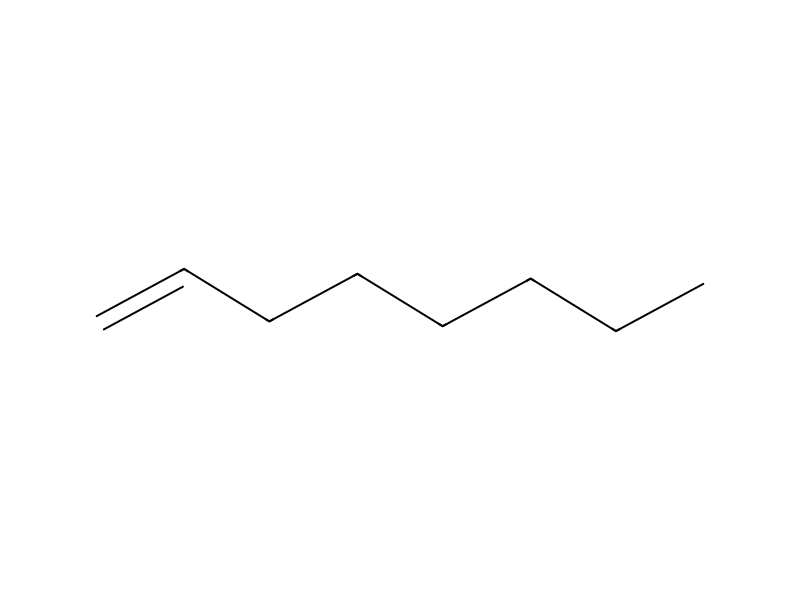
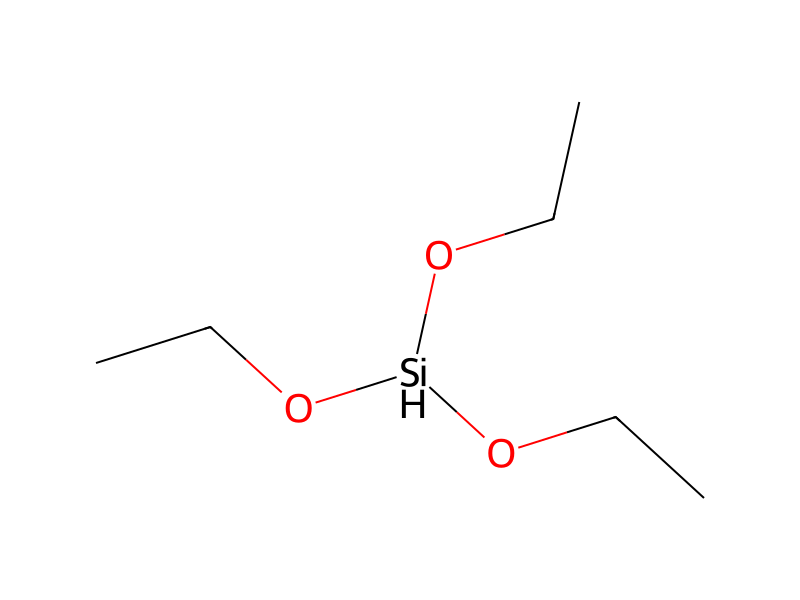
Benzoic Acid → Octyltriethoxysilane
Reaction equation

[CH3:1][CH2:2][CH2:3][CH2:4][CH2:5][CH2:6][CH:7]=[CH2:8].[CH2:9]([O:11][SiH:12]([O:16][CH2:17][CH3:18])[O:13][CH2:14][CH3:15])[CH3:10].C1(C)C=CC=CC=1.C(O)(=O)C1C=CC=CC=1>[H+].[H+].Cl[Pt-2](Cl)(Cl)(Cl)(Cl)Cl.C(O)(C)C>[CH2:8]([Si:12]([O:16][CH2:17][CH3:18])([O:13][CH2:14][CH3:15])[O:11][CH2:9][CH3:10])[CH2:7][CH2:6][CH2:5][CH2:4][CH2:3][CH2:2][CH3:1]Participants
7
Reactant 4

Product 1

Reagents, catalysts & solvents 2


Conditions
- Temperature
- 50 °C
Procedure
224 mg Of octene-1, 328 mg of triethoxysilane and 56 mg of toluene were placed in a glass reaction tube and 8 mg of benzoic acid added. Then, 0.001 ml of an isopropyl alcohol solution of chloroplatinic acid (platinum content: 0.39%) was added to this mixture. The reaction tube was sealed with Teflon tape and heated for 30 minutes in an oil bath at 50° C. When the contents were analyzed by GC-MS following cooling, the conversion rate of octene-1 was 97.5% and n-octyltriethoxysilane was produced at a yield of 91%.
Workup
- additionadded
- temperaturefollowing cooling
Sources & evidence
- ORD record
- ord-a0799c6b8b3746a09ccb4dace06d22e6
- Source dataset
- uspto-grants-1999_11
- Patent number
- US05986124
Reaction notes
Loading…