Hydrochloric Acid → 3-Bromo-N-methyl-5-nitrobenzamide
Reaction equation

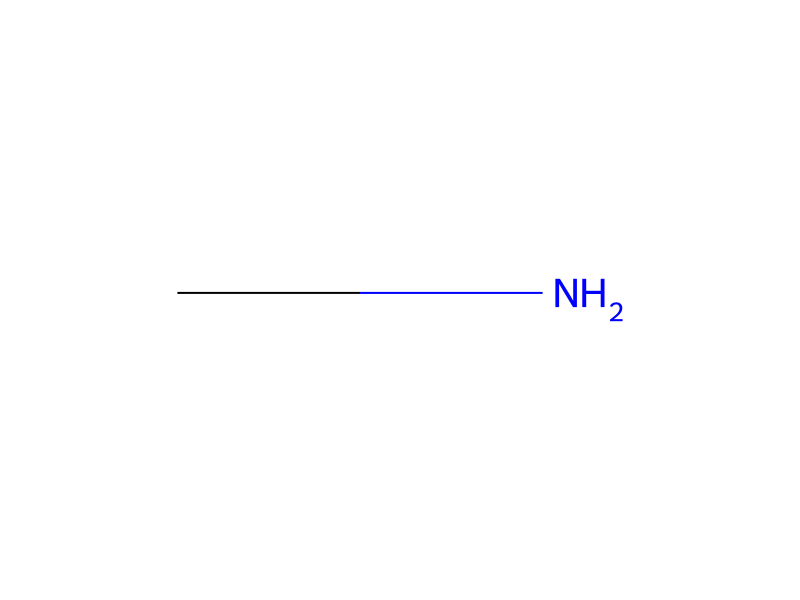
[Br:1][C:2]1[CH:3]=[C:4]([CH:8]=[C:9]([N+:11]([O-:13])=[O:12])[CH:10]=1)[C:5](O)=[O:6].C(Cl)(=O)C(Cl)=O.[CH3:20][NH2:21].Cl>ClCCl.CN(C)C=O.O1CCCC1.C(OCC)(=O)C.O>[CH3:20][NH:21][C:5](=[O:6])[C:4]1[CH:8]=[C:9]([N+:11]([O-:13])=[O:12])[CH:10]=[C:2]([Br:1])[CH:3]=1Participants
Reactant 4



Product 1

Reagents, catalysts & solvents 5





Procedure
A suspension of 3-bromo-5-nitrobenzoic acid (7.10 g, 28.9 mmol) in dichloromethane (50 mL) was treated with oxalyl chloride (5.04 mL, 57.7 mmol) and a few drops of N,N-dimethylformamide, producing gas evolution. After 2 hours, the mixture was concentrated to give an oil, which was dissolved in tetrahydrofuran and added dropwise to a stirred solution of methylamine in tetrahydrofuran (2.0 M, 28.9 mL, 57.7 mmol) at 0° C. After stirring overnight, the mixture was treated with water, ethyl acetate and 0.2 N aqueous hydrochloric acid. The layers were separated after mixing, and the organic phase was washed with 0.2 N aqueous hydrochloric acid, then with saturated aqueous sodium chloride. The solution was dried over sodium sulfate and concentrated under vacuum to provide a yellow solid (7.0 g, 94%). 1H NMR (300 MHz, DMSO-d6) δ9.92 (m, 1H), 8.64 (s, 1H), 8.53 (s, 1H), 8.43 (s, 1H), 2.81 (d, J=7 Hz, 3H).
Workup
- customproducing gas evolution
- concentrationthe mixture was concentrated
- customto give an oil, which
- customThe layers were separated
- additionafter mixing
- washthe organic phase was washed with 0.2 N aqueous hydrochloric acid
- dry with materialThe solution was dried over sodium sulfate
- concentrationconcentrated under vacuum
Sources & evidence
- ORD record
- ord-177ff5190ad74b9a8136a445da552380
- Source dataset
- uspto-grants-2007_06
- Patent number
- US07230022B2
Reaction notes
Loading…