Hydrochloric Acid → Methyl 3-[4-(4-pentylphenyl)phenyl]acrylate
Reaction equation

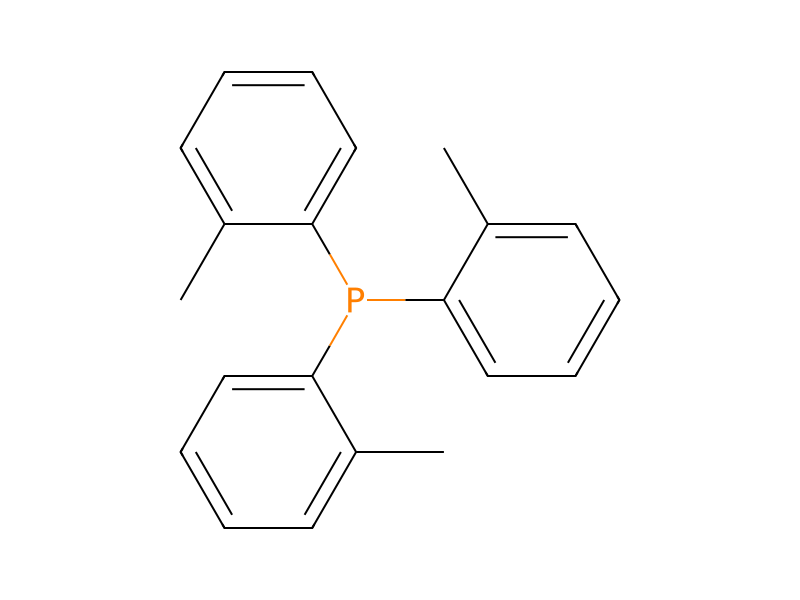
Br[C:2]1[CH:7]=[CH:6][C:5]([C:8]2[CH:13]=[CH:12][C:11]([CH2:14][CH2:15][CH2:16][CH2:17][CH3:18])=[CH:10][CH:9]=2)=[CH:4][CH:3]=1.[C:19]([O:23][CH3:24])(=[O:22])[CH:20]=[CH2:21].C1(C)C=CC=CC=1P(C1C=CC=CC=1C)C1C=CC=CC=1C.Cl>C(N(CC)CC)C.C([O-])(=O)C.[Pd+2].C([O-])(=O)C.C(OCC)(=O)C.O>[CH2:14]([C:11]1[CH:12]=[CH:13][C:8]([C:5]2[CH:6]=[CH:7][C:2]([CH:21]=[CH:20][C:19]([O:23][CH3:24])=[O:22])=[CH:3][CH:4]=2)=[CH:9][CH:10]=1)[CH2:15][CH2:16][CH2:17][CH3:18]Participants
Reactant 4



Product 1

Reagents, catalysts & solvents 4




Procedure
A mixture of 4-bromo-4'-pentylbiphenyl (5.0 g), methyl acrylate (2.2 ml), palladium acetate (0.11 g) and tris(o-tolyl)phosphine (0.60 g) in triethylamine (16 ml) was refluxed for 15 hours under nitrogen atmosphere. The reaction mixture was poured into a mixture of cold water and ethyl acetate, and adjusted to about pH 1.5 with 6N hydrochloric acid. The separated organic layer was washed in turn with water and brine, and dried over magnesium sulfate. The magnesium sulfate was filtered off, and the filtrate was evaporated under reduced pressure to give a crude powder, which was subjected to column chromatography on silica gel (200 ml), and eluted with a mixture of (n-hexane:ethyl acetate=100:0-93:6, V/V) to give Methyl 3-[4-(4-pentylphenyl)phenyl]acrylate (4.48 g).
Workup
- temperaturewas refluxed for 15 hours under nitrogen atmosphere
- washThe separated organic layer was washed in turn with water and brine
- dry with materialdried over magnesium sulfate
- filtrationThe magnesium sulfate was filtered off
- customthe filtrate was evaporated under reduced pressure
- customto give a crude powder, which
- washeluted with a mixture of (n-hexane:ethyl acetate=100:0-93:6, V/V)
Sources & evidence
- ORD record
- ord-d52b9d80b482406980f83cc9b981b6d5
- Source dataset
- uspto-grants-2000_08
- Patent number
- US06107458
Reaction notes
Loading…