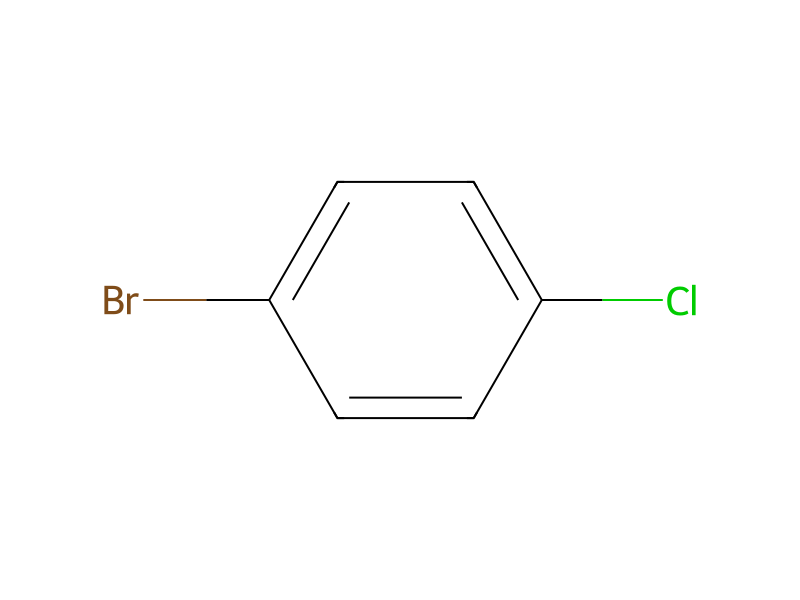
p-Bromochlorobenzene → HCID 10130354, compound
Reaction equation

C([N:3]([CH2:13][CH3:14])[C:4](=O)[C:5]1[C:6](=CC=CC=1)O)C.Br[C:16]1[CH:21]=[CH:20][C:19]([Cl:22])=[CH:18][CH:17]=1.[O-]P([O-])([O-])=O.[K+].[K+].[K+].N1CCCCC1.[OH-].[NH4+].CCCCCCCCCCCC>[Cu]I.O.C(OCC)(=O)C.CN(C=O)C>[Cl:22][C:19]1[CH:20]=[CH:21][C:16]([N:3]2[CH2:4][CH2:5][CH2:6][CH2:14][CH2:13]2)=[CH:17][CH:18]=1Participants
11
Reactant 6





Product 1

Reagents, catalysts & solvents 4




Conditions
- Temperature
- 90 °C
Procedure
CuI (10 mg, 0.05 mmol), N,N-diethylsalicylamide (39 mg, 0.20 mmol), 4-bromochlorobenzene (191 mg, 1.0 mmol) and K3PO4 (425 mg, 2.0 mmol) were put into a screw-capped test tube with a Teflon-lined septum. The tube was then evacuated and backfilled with argon (3 cycles). Piperidine (148 μL, 1.5 mmol) and DMF (0.5 mL) were added by syringes. The reaction mixture was stirred at 90° C. for 20 h. The reaction mixture was allowed to reach room temperature. Ethyl acetate (˜2 mL), water (˜10 mL), ammonium hydroxide (˜0.5 mL) and dodecane (227 μL) were added. The organic phase was analyzed by GC and GC-MS. A 75% conversion of 4-bromochlorobenzene and 29% calibrated GC yield was obtained.
Workup
- customThe tube was then evacuated
- customto reach room temperature
- customyield
- customwas obtained
Sources & evidence
- ORD record
- ord-5c520f87749f468cbabe4e535b1764f6
- Source dataset
- uspto-grants-2004_07
- Patent number
- US06759554B2
Reaction notes
Loading…