Tetrahydrofuran → 6-(3,3-Diethoxypropyl)quinoline
Reaction equation

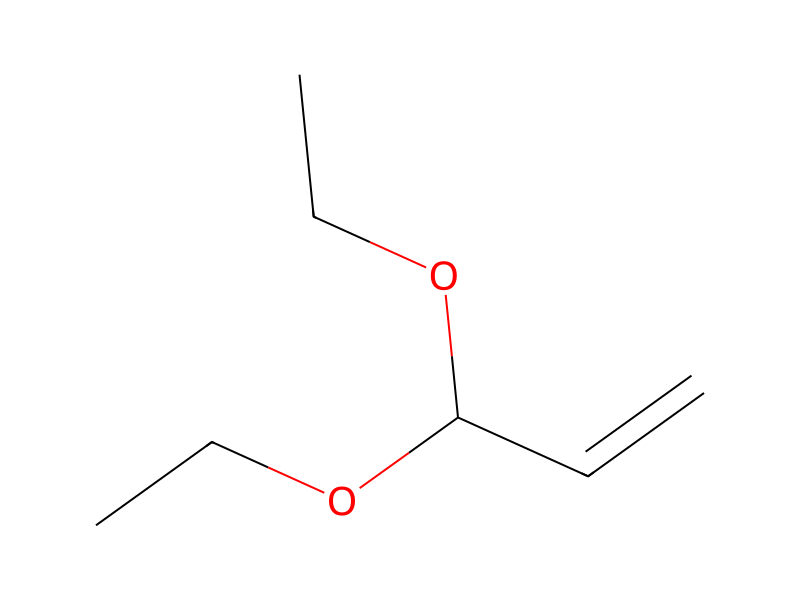
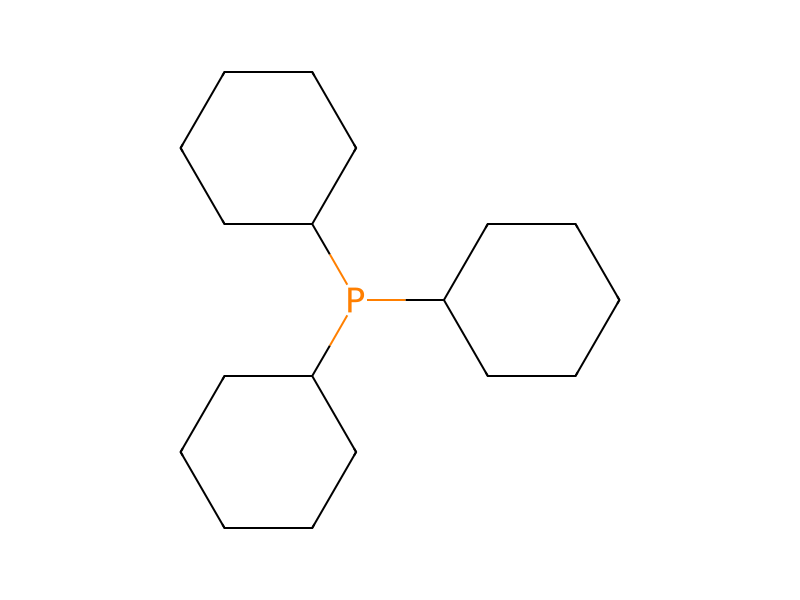
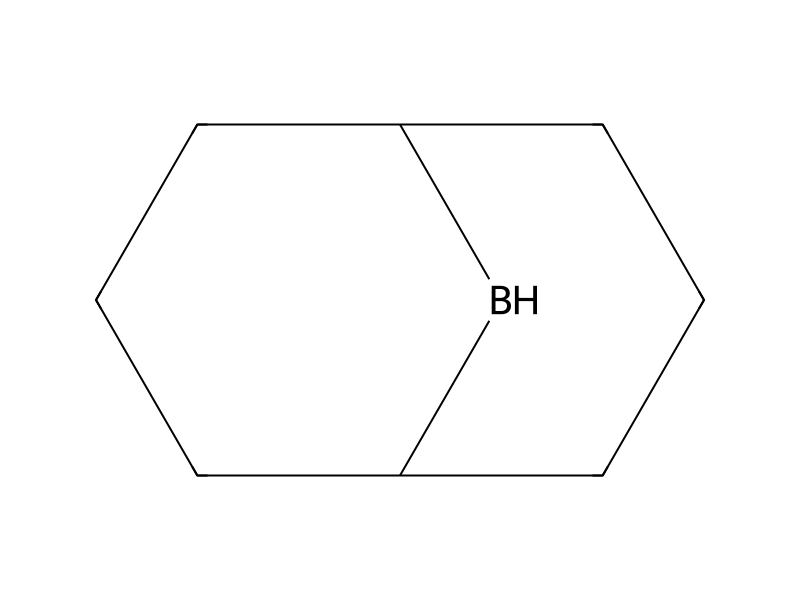
[CH2:1]([O:3][CH:4]([O:7][CH2:8][CH3:9])[CH:5]=[CH2:6])[CH3:2].C12BC(CCC1)CCC2.O1CCCC1.Br[C:25]1[CH:26]=[C:27]2[C:32](=[CH:33][CH:34]=1)[N:31]=[CH:30][CH:29]=[CH:28]2.C(=O)([O-])[O-].[K+].[K+].C1(P(C2CCCCC2)C2CCCCC2)CCCCC1>C([O-])(=O)C.[Pd+2].C([O-])(=O)C.O>[CH2:1]([O:3][CH:4]([O:7][CH2:8][CH3:9])[CH2:5][CH2:6][C:25]1[CH:26]=[C:27]2[C:32](=[CH:33][CH:34]=1)[N:31]=[CH:30][CH:29]=[CH:28]2)[CH3:2]Participants
Reactant 6



Product 1

Reagents, catalysts & solvents 2


Conditions
- Temperature
- 40 °C
Procedure
3,3-Diethoxy-1-propene (548 g, 4.2 mol, 1.75 equiv) was added to a 22 L flask charged with 0.5 M solution of 9-borabicyclo[3.3.1]nonane in tetrahydrofuran (9-BBN solution in THF, 8.4 L, 4.2 mol, 1.75 equiv) at room temperature (the internal temperature raised to 40° C.) over 1 h. The resulting reaction mixture was stirred at room temperature for overnight. At which time 1H NMR of an aliquot of the reaction mixture indicated that all the 3,3-diethoxy-1-propene had been consumed. 6-Bromoquinoline (8, 500 g, 2.4 mol, 1.0 equiv), potassium carbonate (K2CO3, 662 g, 4.8 mol, 2.0 equiv), tricyclohexylphosphine (67.4 g, 0.24 mol, 0.1 equiv), palladium acetate (Pd(OAc)2, 27 g, 0.12 mol, 0.05 equiv) and water (90 mL) were added to the reaction mixture in that order followed by degassing with nitrogen for 0.5 h. The reaction mixture was then heated to reflux for 4 h. Once TLC and LC/MS showed that the starting material had been consumed, the reaction mixture was cooled to room temperature with stirring before being quenched with water (7.5 L) and ethyl acetate (EtOAc, 7.5 L). The layers were separated and the aqueous layer was extracted with ethyl acetate (EtOAc, 4 L). The combined organic layers were washed with a saturated brine solution (NaCl, 4 L), dried over magnesium sulfate (MgSO4) and concentrated under the reduced pressure. The residue was purified by column chromatography (SiO2, 10-60% of ethyl acetate in heptane gradient elution) to afford 6-(3,3-diethoxypropyl)quinoline (23, 520 g, 622.4 g theoretical, 83.5% yield) as a colorless oil. For 23: 1HNMR (DMSO-d6, 300 MHz) δ ppm 8.81 (dd, 1H, J=4.23 Hz, 1.73 Hz), 8.28 (d, 1H, J=8.07 Hz), 7.91 (d, 1H, J=8.62 Hz), 7.75 (s, 1H), 7.61 (dd, 1H, J=8.63 Hz, 1.92 Hz), 7.46 (dd, 1H, J=8.25 Hz, 4.22 Hz), 4.46 (t, 1H, J=5.60 Hz), 3.61-3.38 (m, 4H), 2.79 (t, 2H, J=8.53 Hz), 1.95-1.85 (m, 2H), 1.11 (t, 6H, J=6.84 Hz); C16H21NO2 (MW 259.34), LCMS (EI) m/e 260.2 (M++H).
Workup
- customThe resulting reaction mixture
- customhad been consumed
- customby degassing with nitrogen for 0.5 h
- temperatureThe reaction mixture was then heated
- temperatureto reflux for 4 h
- customhad been consumed
- temperaturethe reaction mixture was cooled to room temperature
- stirringwith stirring
- custombefore being quenched with water (7.5 L) and ethyl acetate (EtOAc, 7.5 L)
- customThe layers were separated
- extractionthe aqueous layer was extracted with ethyl acetate (EtOAc, 4 L)
- washThe combined organic layers were washed with a saturated brine solution (NaCl, 4 L)
- dry with materialdried over magnesium sulfate (MgSO4)
- concentrationconcentrated under the reduced pressure
- customThe residue was purified by column chromatography (SiO2, 10-60% of ethyl acetate in heptane gradient elution)
Sources & evidence
- ORD record
- ord-8e1820ad3e364d58860ac9997d0df040
- Source dataset
- uspto-grants-2013_04
- Patent number
- US08420645B2
Reaction notes
Loading…