Methylamine → (3-(3-Pyridyloxy)propyl)methylamine
Reaction equation

[OH:1][C:2]1[CH:3]=[N:4][CH:5]=[CH:6][CH:7]=1.[Cl:8][CH2:9][CH2:10][CH2:11]Cl.BrCCCBr.ClCCCI.[H-].[Na+].[N:25]1[CH:30]=[CH:29][CH:28]=[C:27]([O:31][CH2:32][CH2:33][CH2:34][NH:35][CH3:36])[CH:26]=1.CN>CN(C)C=O.CO.O1CCCC1>[N:25]1[CH:30]=[CH:29][CH:28]=[C:27]([O:31][CH2:32][CH2:33][CH2:34][NH:35][CH3:36])[CH:26]=1.[Cl:8][CH2:9][CH2:10][CH2:11][O:1][C:2]1[CH:3]=[N:4][CH:5]=[CH:6][CH:7]=1Participants
Reactant 7
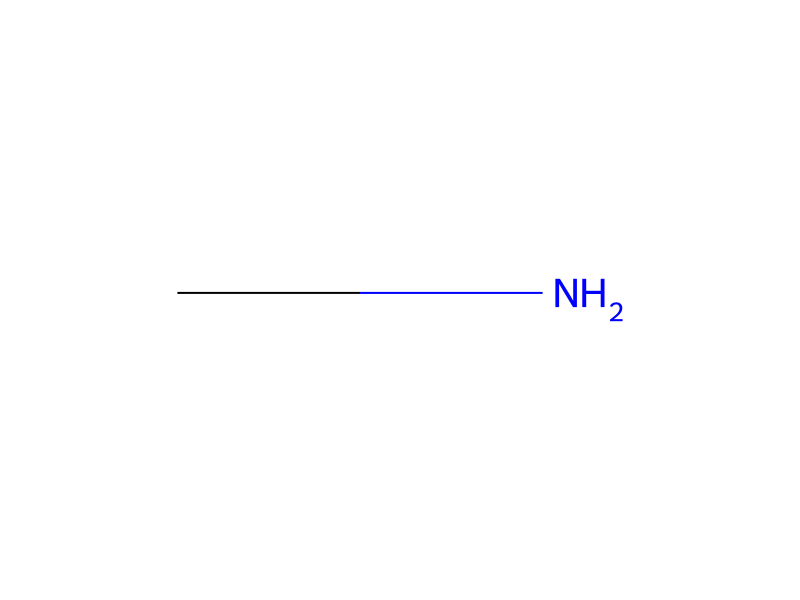





Product 2

Reagents, catalysts & solvents 3



Procedure
The manner by which pyridyloxyalkylamine compounds of the present invention are provided can vary. Certain pyridyloxyalkylamine compounds can be prepared by the alkylation of 3-hydroxypyridine with a 1,3-dihalopropane, such as 1,3-dichloropropane, 1,3-dibromopropane, 1,3-diodopropane or 1-chloro-3-iodopropane, which are commercially available from Aldrich Chemical Company, in the presence of a base (e.g., sodium hydride) in dry N,N-dimethylformamide. The resulting 3-halo-1-(3-pyridyloxy)propane can be converted to a pyridyloxyalkylamine, such as (3-(3-pyridyloxy)propyl)-methylamine, by treatment with methylamine in a solvent, such as tetrahydrofuran or aqueous methanol. One representative compound, (3-(3-pyridyloxy)propyl)methylamine is prepared by the reaction of 3-hydroxypyridine with 1.2 molar equivalents of 1 -chloro-3-iodopropane and 1.6 molar equivalents of sodium hydride in dry N,N-dimethylformamide at ambient temperature. The resulting intermediate, 3-chloro-1-(3-pyridyloxy)propane, obtained in about 54% yield, is converted to (3-(3-pyridyloxy)propyl)methylamine in about 40% yield, by treatment with an excess (25 molar equivalents) of aqueous methylamine in methanol, assisted by heating. Certain pyridyloxyalkylamine compounds, such as (4-(3-pyridyloxy)-butyl)methylamine, can be prepared by alkylating 3-hydoxypyridine with a 1,4-dihalobutane, such as 1,4-diiodobutane, 1,4-dibromobutane, 1,4-dichlorobutane or 1-chloro-4-iodobutane, which are commercially available from Aldrich Chemical Company, in the presence of a base (e.g., sodium hydride) in N,N-dimethylformamide. The resulting 4-halo-1-(3-pyridyloxy)butane can be converted to a pyridyloxyalkylamine, such as (4-(3-pyridyloxy)butyl)methylamine, by treatment with methylamine in a solvent, such as tetrahydrofuran or aqueous methanol.
Sources & evidence
- ORD record
- ord-cea2783035774619b41947f16c5ec9f0
- Source dataset
- uspto-grants-2002_08
- Patent number
- US06441006B2
Reaction notes
Loading…