Potassium Carbonate → 4-Methyl-2-phenylquinoline
Reaction equation

Cl[C:2]1[CH:11]=[C:10]([CH3:12])[C:9]2[C:4](=[CH:5][CH:6]=[CH:7][CH:8]=2)[N:3]=1.[C:13]1(B(O)O)[CH:18]=[CH:17][CH:16]=[CH:15][CH:14]=1.C1(P(C2C=CC=CC=2)C2C=CC=CC=2)C=CC=CC=1.C(=O)([O-])[O-].[K+].[K+]>C([O-])(=O)C.[Pd+2].C([O-])(=O)C.C(OCC)(=O)C.COCCOC>[C:13]1([C:2]2[CH:11]=[C:10]([CH3:12])[C:9]3[C:4](=[CH:5][CH:6]=[CH:7][CH:8]=3)[N:3]=2)[CH:18]=[CH:17][CH:16]=[CH:15][CH:14]=1Participants
Reactant 4



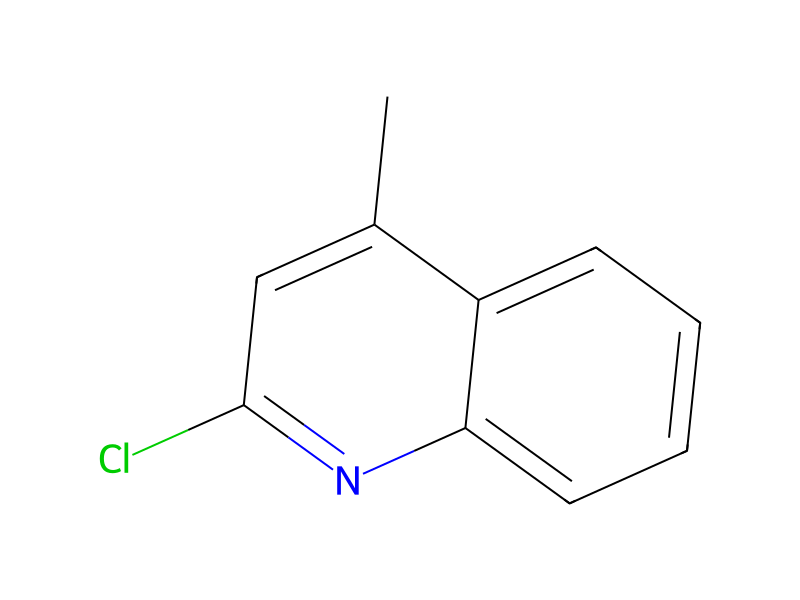
Product 1

Reagents, catalysts & solvents 3



Procedure
2-Chloro-4-methylquinoline (5.0 g, 30 mmol) and phenyl boronic acid (4.4 g, 36 mmol) were dissolved into 100 mL of ethylene glycol dimethyl ether. To the stirred reaction was added triphenylphosphine (0.8 g) and palladium(II) acetate, followed by 50 mL of a 2 M solution of potassium carbonate. The reaction was refluxed for 16 hours. After cooling, the aqueous layer was discarded and additional ethyl acetate added. The organics were washed with a saturated solution of sodium chloride and separated. The organic layer was dried over magnesium sulfate, concentrated, and purified on a silica gel column using 20% ethyl acetate and hexanes as the eluants. The pure fractions were combined and concentrated to give 2-phenyl-4-methylquinoline (4.0 g, 61% yield) as an oil.
Workup
- customTo the stirred reaction
- temperatureThe reaction was refluxed for 16 hours
- temperatureAfter cooling
- washThe organics were washed with a saturated solution of sodium chloride
- customseparated
- dry with materialThe organic layer was dried over magnesium sulfate
- concentrationconcentrated
- custompurified on a silica gel column
- concentrationconcentrated
Sources & evidence
- ORD record
- ord-e2cf8114536042a0951a2f81f871b771
- Source dataset
- uspto-grants-2004_12
- Patent number
- US06835469B2
Reaction notes
Loading…