Lithium Hydroxide → HCID 89555423, compound
Reaction equation

[CH3:1][C:2]1([CH3:16])[C:6]([CH3:8])([CH3:7])[O:5][B:4]([C:9]2[CH:14]=[CH:13][C:12]([OH:15])=[CH:11][CH:10]=2)[O:3]1.Br[CH2:18][C:19]1[CH:20]=[C:21]([CH:26]=[CH:27][CH:28]=1)[C:22]([O:24]C)=O.C(=O)([O-])[O-].[K+].[K+].[OH-].[Li+].Cl.C(N=C=NCCCN(C)C)C.CCN=C=NCCCN(C)C.[NH:60]1[CH2:71][CH2:70][CH2:69][C@H:61]1[C:62]([O:64]C(C)(C)C)=[O:63].C(N(CC)CC)C>C(OCC)(=O)C.ClCCl.O.CO.CN(C=O)C>[CH3:8][C:6]1([CH3:7])[C:2]([CH3:16])([CH3:1])[O:3][B:4]([C:9]2[CH:14]=[CH:13][C:12]([O:15][CH2:18][C:19]3[CH:20]=[C:21]([CH:26]=[CH:27][CH:28]=3)[C:22]([N:60]3[CH2:71][CH2:70][CH2:69][C@H:61]3[C:62]([OH:64])=[O:63])=[O:24])=[CH:11][CH:10]=2)[O:5]1Participants
Reactant 8
 HCID 3939Lithium Hydroxide
 HCID 8471Triethylamine
 HCID 11430Potassium Carbonate
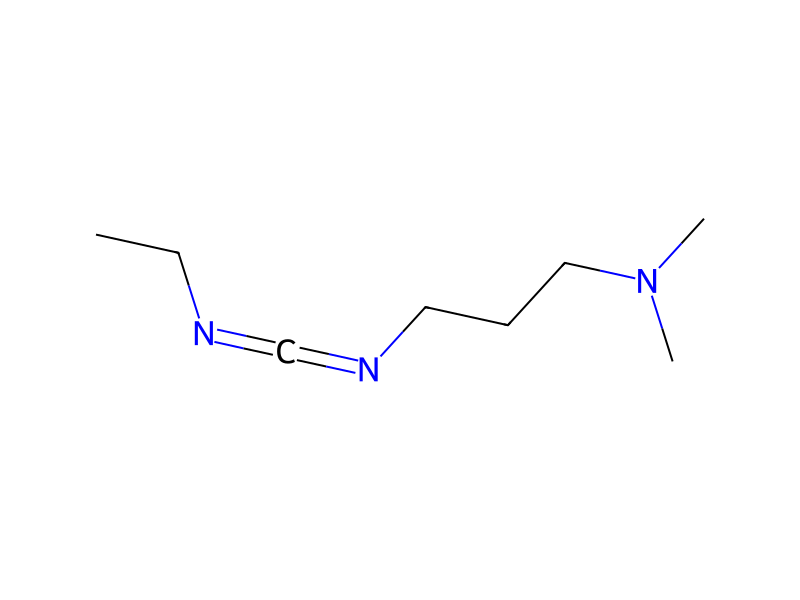 HCID 159081-Ethyl-3-(3'-dimethylaminopropyl)carbodiimide
 HCID 517981Methyl 3-(bromomethyl)benzoate
 HCID 27239391,3-Propanediamine, N'-(ethylcarbonimidoyl)-N,N-dimethyl-, monohydrochloride
 HCID 27346244-(4,4,5,5-Tetramethyl-1,3,2-dioxaborolan-2-yl)phenol
 HCID 6453108L-Proline 1,1-dimethylethyl ester
Product 1

Reagents, catalysts & solvents 5





Procedure
DMF (125 mL) was added to 4-(4,4,5,5-tetramethyl-1,3,2-dioxaborolan-2-yl)phenol (8.46 g, 38 mmol), methyl 3-(bromomethyl)benzoate (8.8 g, 38 mmol), and potassium carbonate (10.6 g, 77 mmol), and stirred at room temperature overnight. The resultant was diluted with ethyl acetate, washed with water and saturated brine, and then dried over anhydrous magnesium sulfate. The solvent was distilled away under reduced pressure. To the resulting residue, methanol (150 mL), water (30 mL), and lithium hydroxide (4.8 g, 114 mmol) were added, and stirred at room temperature overnight. After the solvent was distilled away under reduced pressure, the resultant was diluted with ethyl acetate, then washed with 1 N hydrochloric acid and saturated brine, and dried over anhydrous magnesium sulfate. The solvent was distilled away under reduced pressure. To the resulting residue, dichloromethane (150 mL), 1-ethyl-3-(3-dimethylaminopropyl)-carbodiimide hydrochloride (hereinafter, WSC) (7.34 g, 38.2 mmol), tert-butyl L-prolinate (7.95 g, 38.2 mmol), and triethylamine (9.65 mL, 69.4 mmol) were added, and stirred at room temperature overnight. The resultant was washed with water, 1 N hydrochloric acid, 1 N sodium hydroxide, and saturated brine, and then dried over anhydrous magnesium sulfate. The solvent was distilled away under reduced pressure, and the residue was purified by silica gel chromatography (hexane/ethyl acetate). To the resulting compound, TFA (150 mL) was added, and stirred at room temperature for 3 hours. The solvent was distilled away under reduced pressure to thus obtain the title compound.
Workup
- washwashed with water and saturated brine
- dry with materialdried over anhydrous magnesium sulfate
- distillationThe solvent was distilled away under reduced pressure
- stirringstirred at room temperature overnight
- distillationAfter the solvent was distilled away under reduced pressure
- additionthe resultant was diluted with ethyl acetate
- washwashed with 1 N hydrochloric acid and saturated brine
- dry with materialdried over anhydrous magnesium sulfate
- distillationThe solvent was distilled away under reduced pressure
- stirringstirred at room temperature overnight
- washThe resultant was washed with water, 1 N hydrochloric acid, 1 N sodium hydroxide, and saturated brine
- dry with materialdried over anhydrous magnesium sulfate
- distillationThe solvent was distilled away under reduced pressure
- customthe residue was purified by silica gel chromatography (hexane/ethyl acetate)
- additionTo the resulting compound, TFA (150 mL) was added
- stirringstirred at room temperature for 3 hours
- distillationThe solvent was distilled away under reduced pressure
Sources & evidence
- ORD record
- ord-b64c466cbb5c4bf885467177299d6ae1
- Source dataset
- uspto-grants-2016_03
- Patent number
- US09290487B2
Reaction notes
Loading…